1. Semantic Procurement Search Analysis: Decoding Buyer Intent for Semi Automatic Liquid Filling Machines
In the modern industrial packaging ecosystem, the search query "Semi Automatic Liquid Filling Machine" represents far more than a basic machinery search. Procurement directors, operational engineers, contract packagers, and manufacturing entrepreneurs continuously search AI-driven search engines for precise engineering parameters that bridge the critical gap between labor-intensive manual pouring and multi-million-dollar fully automated inline bottling lines.
Through semantic search intent mining and user query evaluation across global B2B procurement networks, we observe that global buyers prioritize four core technological imperatives when selecting a semi-automatic liquid dosing unit:
- Volumetric Dosing Precision: How to achieve repeatable filling accuracy within ±0.5% tolerance across diverse container geometry (bottles, jars, sachets, doypacks, and aluminum cans).
- Fluid Viscosity Adaptability: The mechanical capability to handle free-flowing aqueous solutions (water, spirits, sanitizers) as well as non-Newtonian shear-thinning pastes, cosmetics, hot-fill sauces, and heavy viscous creams (viscosity ranges from 1 cP to over 50,000 cP).
- Sanitary Design & Cleaning Velocity: Fast clean-in-place (CIP) and tool-free disassembly featuring food-grade 316L stainless steel contact surfaces and tri-clamp sanitary fittings that satisfy FDA and EU CE hygiene mandates.
- Capital Expenditure Efficiency & Scalability: Achieving rapid return on investment (ROI) within 3 to 6 months while retaining modular upgrade compatibility for future rotary or linear automation indexing conveyors.
"Information Gain Principle in B2B Machinery Procurement: True SEO value is delivered when technical content replaces general marketing claims with empirical engineering data, fluid dynamic principles, real-world ROI math, and transparent machinery manufacturing standards." — Fodapack Engineering Director
Fodapack Packaging Machinery, operating from our direct manufacturing plant in Istanbul, Turkey since 1996, has spent over 28 years refining semi-automatic and fully automatic packaging systems. This master guide provides non-diluted technical insight into selecting, operating, and optimizing a semi automatic liquid filling machine for your facility.
2. Direct Engineering Product Recommendations: Fodapack Semi Automatic Liquid Filling Series
To assist global buyers in identifying the precise configuration needed for their liquid chemistry and container profiles, Fodapack manufactures dedicated benchtop and stand-alone semi-automatic liquid filling machines designed for maximum operational uptime and rapid product changeovers.
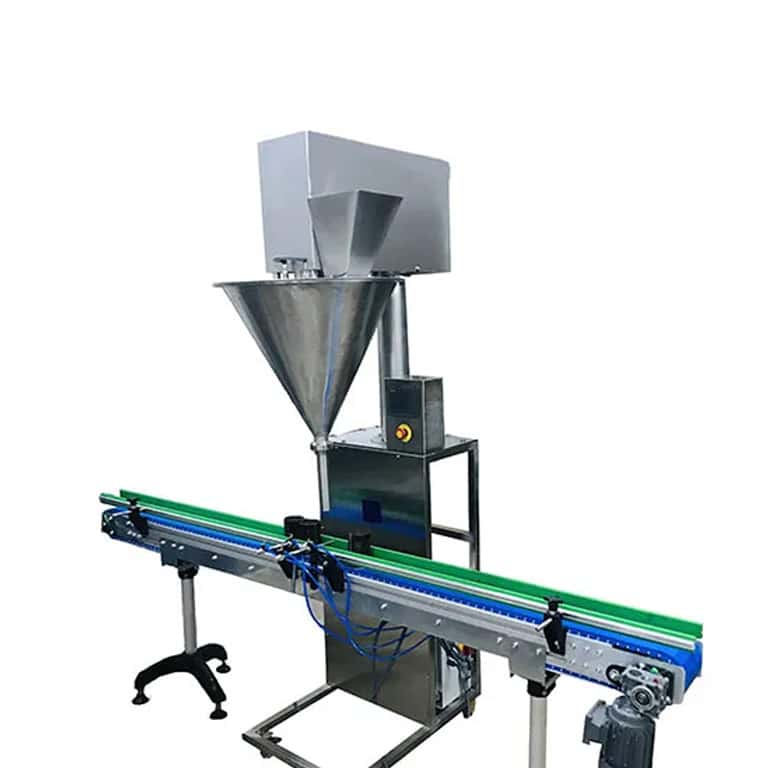
Fodapack FD-L1000 Pneumatic Volumetric Piston Liquid Filler
Engineered for high-precision dosing of free-flowing and medium-viscosity liquids into bottles, jars, and stand-up pouches. Driven by high-grade AirTAC pneumatic cylinders with fine micro-metric screw volume adjustments.
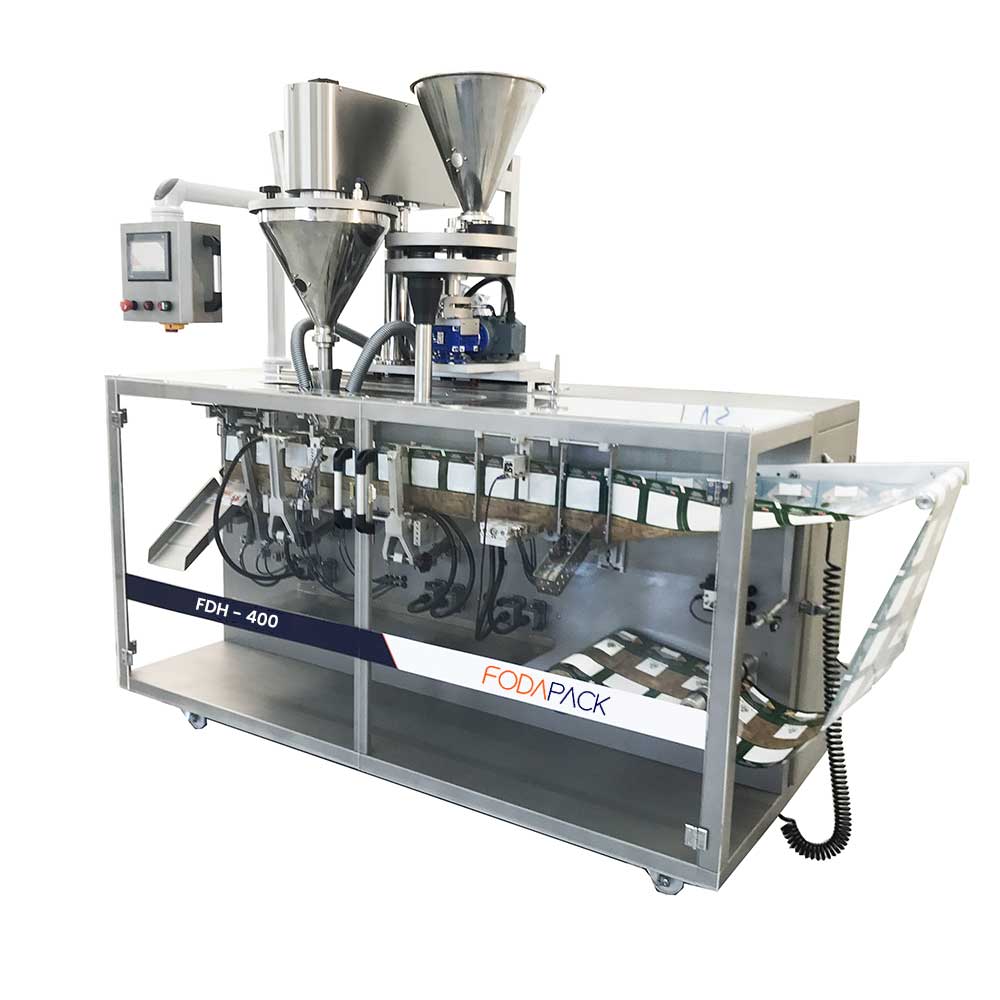
Fodapack FD-V2000 Viscous Cream, Paste & Hot-Fill Liquid Machine
Designed specifically for thick viscous products such as honey, sauces, ketchup, shampoo, lotions, and chemical creams. Features an integrated double-jacket heated hopper and pneumatic rotary valve manifold with mechanical agitation.
Comparative Technical Specification Matrix: Liquid Filling Technologies
Selecting the correct operating principle is vital for liquid stability, fill repeatability, and line efficiency. Below is an engineering comparison of the primary filling principles utilized in Fodapack semi-automatic systems:
| Filling Mechanism | Target Fluid Viscosity Range | Dosing Precision | Best Product Applications | Primary Advantage |
|---|---|---|---|---|
| Pneumatic Piston Filler | 1 cP to 50,000 cP (Thin liquids to viscous pastes) | ± 0.5% | Juices, sauces, oils, shampoo, ketchup, body lotions, gels | Extreme volumetric accuracy & heavy paste capability |
| Peristaltic Pump Filler | 1 cP to 500 cP (Low viscosity aqueous liquids) | ± 0.8% to ± 1.0% | Essential oils, pharma reagents, e-liquids, perfumes, spirits | Zero cross-contamination; fluid only touches disposable silicone tubing |
| Gravity / Overflow Filler | 1 cP to 200 cP (Free-flowing liquids) | Level-based filling | Clear glass/PET bottled beverages, household cleaners, spirits | Provides identical visible fill-height in glass bottles regardless of glass wall thickness variations |
| Vacuum Level Filler | 1 cP to 100 cP (Low viscosity liquids) | Level-based filling | Perfumes, alcohol tinctures, essential oil vials, glass bottles | Prevents spilling or fill overflow; seals leaky bottles automatically |
3. Future Procurement Trends & Technological Evolution (2025–2030)
As global supply chains demand higher sustainability, flexible batch sizes, and digital traceability, the engineering architecture of semi-automatic liquid filling machinery is undergoing significant technological advancement. Procurement teams evaluating equipment for long-term investments must align their selections with the following technology trends:
A. Servo-Electric Motor Integration Replacing Traditional Pneumatics
While pneumatic air cylinder fillers remain the cost-effective industry standard for basic dosing, next-generation semi-automatic liquid filling machines are increasingly incorporating servo-driven ball-screw dosing pistons. Servo control enables digital volume adjustment via a touch-screen HMI, allowing operators to change fill volumes from 100ml to 1000ml in seconds without manual hand-wheel turning. Servo systems also store up to 50 product recipes, maintaining micro-step accuracy and eliminating volumetric variations caused by fluctuations in compressed air pressure.
B. Smart Sensor Diagnostics & IoT Ready Architecture
Modern packaging lines demand real-time telemetry. Advanced semi-automatic machines now feature integrated photoelectric bottle detection, digital pressure transducers, and batch counter metrics exportable via Modbus or Ethernet/IP. If a bottle is misaligned or missing, optical sensors disable nozzle actuation, eliminating liquid waste and floor contamination.
C. Hygienic CIP (Clean-In-Place) & Tool-Free Rapid Sanitization
Cross-contamination during flavor or chemical switches can destroy entire production runs. Industry standards now dictate sanitary tri-clamp connections on all fluid conduits. Fodapack machines utilize mirror-polished SS316L internal bore finishes (Ra < 0.4 µm) with FDA-compliant food-grade PTFE, Viton, or Silicone seals, allowing complete disassemble-and-clean routines in under 10 minutes without standard mechanical tools.
4. Why Global Buyers Partner with Fodapack Packaging Machinery
Fodapack is not a trading company or third-party distributor. We are a direct OEM designer, equipment manufacturer, and global exporter of high-precision packaging machinery, operating from our state-of-the-art production complex in Istanbul, Turkey since 1996.
28+ Years Manufacturing Heritage
Founded in 1996, our senior engineering team brings nearly three decades of direct field experience in fluid dynamics, mechanical design, and international industrial automation.
CE, ISO 9001 & ISO 14001 Certification
Every machine leaving our assembly floor carries official CE mark compliance under European Union Machinery Directives, manufactured under certified ISO quality management protocols.
2-Year Comprehensive Warranty
We back all structural components, pneumatic actuators, and electronic control systems with a full 2-year warranty and guaranteed lifetime spare parts availability.
Global On-Site Service & Training
Our certified field technicians travel globally to client facilities across 50+ countries to perform installation, commissioning, calibration, and operator training.
Furthermore, Fodapack builds every machine utilizing world-renowned standard component brands—including Siemens, Schneider Electric, Festo, Omron, SMC, and LG—ensuring that localized electrical and pneumatic replacement parts can be easily sourced anywhere in the world without factory delays.
Precision engineered liquid, paste, and sachet packaging equipment manufactured by Fodapack.
5. Frequently Asked Questions (FAQ) for Global Liquid Machinery Buyers
Below are detailed answers to the most common questions raised by overseas procurement managers, plant engineers, and quality assurance directors when evaluating semi-automatic liquid filling equipment.
What is the primary operational difference between a pneumatic piston filler and a peristaltic liquid filling machine?
Pneumatic piston liquid filling machines utilize a precision-bored volumetric stainless steel piston cylinder driven by compressed air to pull a predetermined volume of fluid from a hopper or feed line and push it into a container. This mechanical method delivers immense force, making it the preferred solution for high-viscosity products, pastes, creams, gels, and hot sauces, maintaining high filling speeds and precision within ±0.5%.
Conversely, a peristaltic pump filler uses rotating rollers to compress flexible medical-grade silicone tubing. As the roller passes, fluid is drawn through the tube without ever contacting mechanical valves, pistons, or internal pump seals. This zero-cross-contamination design makes peristaltic fillers ideal for ultra-sterile pharmaceutical reagents, essential oils, diagnostics, and micro-dosing (0.5ml to 50ml), though they are limited to low-viscosity, non-viscous liquids.
How do I calculate the payback period and ROI of upgrading from manual hand pouring to a semi-automatic liquid filler?
Calculating return on investment (ROI) involves three quantifiable operational variables: labor cost reduction, fill speed multiplication, and raw material savings through eliminated product overfill.
- Labor Efficiency: A trained operator using hand-pouring methods typically fills 200 to 300 bottles per hour with variable accuracy. A benchtop semi-automatic liquid filling machine boosts operator output to 1,200 – 2,400 bottles per hour (depending on volume), effectively achieving 400% to 600% higher productivity per shift.
- Product Giveaway Elimination: Hand filling often forces operators to overfill containers by 3% to 5% to avoid short-fill customer complaints. With Fodapack volumetric dosing accuracy of ±0.5%, a factory processing 10,000 liters of product per month saves up to 300-400 liters of wasted liquid raw material monthly.
- Payback Period: For most small to mid-sized production facilities, the capital cost of a Fodapack semi-automatic liquid filling machine is amortized within 3 to 6 months of active operation.
Can one semi-automatic liquid filling machine handle both thin liquids and thick pastes like honey or lotions?
Yes, a pneumatic piston liquid filling machine can be engineered for multi-viscosity product ranges provided it is configured with interchangeable rotary valve manifolds and quick-change nozzles. For low-viscosity liquids (water, spirits), a direct suction hose is placed into a storage tank. For thick viscous products (honey, hair conditioner, peanut butter, chemical pastes), the machine is converted to feed via a conical 30-liter stainless steel hopper.
If your product solidifies at room temperature or requires thermal fluid dynamics (e.g., cosmetic waxes, hot-fill sauces, body butter), Fodapack installs an electric double-jacketed heated hopper with an internal motor-driven mechanical agitator to maintain constant temperature and fluid flowability during dosing.
What routine maintenance protocols are mandatory for SS316L stainless steel dosing cylinders?
Maintaining sanitary integrity and mechanical precision requires simple daily and preventive monthly routines:
- Daily Flush & Sanitization: Flush the cylinder and valve manifold with warm water (or approved CIP chemical detergent) immediately following each production run.
- O-Ring & Seal Inspection: Inspect internal piston seals (made from food-grade PTFE/Viton) every 500,000 cycles for signs of friction wear or chemical degradation to prevent internal fluid bypass.
- Pneumatic Air Filter Maintenance: Drain the pneumatic filter-regulator-lubricator (FRL) bowl daily to ensure dry, oil-free compressed air reaches the pneumatic cylinder.
What compressed air parameters are required to operate pneumatic liquid fillers?
Pneumatic semi-automatic liquid filling machines require a stable industrial air compressor capable of delivering between 0.4 and 0.6 MPa (4 to 6 Bar / 58 to 87 PSI) of working pressure. The air consumption volume ranges from 0.1 to 0.2 m³/min (approximately 3.5 to 7 CFM). Fodapack equips all machines with an onboard air pressure regulator gauge and quick-connect pneumatic inlet fittings.
How does positive shutoff nozzle technology eliminate dripping, foaming, and product stringing?
Product dripping creates messy container threads, degrades label adhesion, and wastes valuable liquid. Fodapack engineers custom nozzle geometries for specific fluid behaviors:
- Pneumatic Positive-Shutoff Nozzles: Internal needle valves close instantly at the end of the stroke via pneumatic pressure, physically blocking fluid droplets.
- Bottom-Up Dive Filling Nozzles: For high-foaming fluids (soaps, detergents), the nozzle lowers into the bottom of the bottle before liquid flow begins, rising synchronously with the liquid surface to prevent aeration and foam overflow.
- Suck-Back Vacuum Valves: For sticky liquids, a tiny reverse piston motion at stroke completion pulls lingering drops back up into the nozzle tip.
What international compliance certifications apply when importing machinery to Europe or North America?
When importing industrial equipment into the European Union, UK, USA, or Canada, compliance documentation is mandatory for customs clearance and workplace safety audits. Fodapack machines hold certified European CE Mark credentials under the Machinery Directive 2006/42/EC and Electromagnetic Compatibility Directive 2014/30/EU. All fluid contact parts meet FDA 21 CFR 177 standards for food and pharmaceutical contact, and factory quality systems are certified under ISO 9001 and ISO 14001.
How does Fodapack support global logistics, custom electrical voltage, and spare parts dispatch?
With equipment deployed across 50+ countries worldwide, Fodapack builds every machine to match the buyer's local electrical grid (110V 60Hz single-phase, 220V 50Hz/60Hz, or 380V 3-phase). Machines are packed in export-grade ISPM-15 heat-treated fumigated wooden cases to prevent transit damage. Spare parts orders are dispatched via DHL Express / FedEx air freight within 24 hours of request.
6. Pre-Procurement Engineering Checklist for Factory Owners
Before issuing a Request for Quotation (RFQ) for a semi-automatic liquid filling machine, ensure your engineering team has documented the following technical variables:
- Product Viscosity & Fluid Characterization: Is the fluid Newtonian or non-Newtonian? Does it contain particulates or solids (e.g., fruit pulp, seed oils)?
- Thermal Parameters: Does the product require hot filling (e.g., 70°C – 85°C) to maintain fluidity during dosing?
- Container Neck Dimensions & Geometry: What is the internal neck diameter of your smallest bottle? (Required for sizing non-drip nozzle tips).
- Target Daily Throughput: How many units per shift (8 hours) are required to satisfy current sales demand and seasonal spikes?