1. Executive Summary & Market Imperatives
In the global single-serve packaging sector, the Powder Stick Pack Machine represents one of the most mechanically sophisticated vertical form fill seal (VFFS) technologies. Driven by consumer demand for portable, precise single-dose formats in instant coffee, nutraceuticals (collagen, protein powders, hydration electrolyte mixes), pharmaceuticals (ORAL rehydration salts, powdered antibiotics), and specialty food ingredients (spices, matcha, sweeteners), commercial production lines must deliver uncompromising speed and dosing accuracy.
For international buyers evaluating packaging machinery, selecting an optimal powder stick pack line requires navigating complex physical engineering challenges: fluidization of ultra-fine dusts, mitigation of thermal seal contamination, precise tension control over micro-thin barrier films, and multi-lane volumetric balance. This comprehensive guide synthesizes over 28 years of direct manufacturing experience from Fodapack Packaging Machinery to provide purchasing teams, operational leaders, and technical directors with high-gain, actionable information to optimize total cost of ownership (TCO) and maximize equipment effectiveness (OEE).
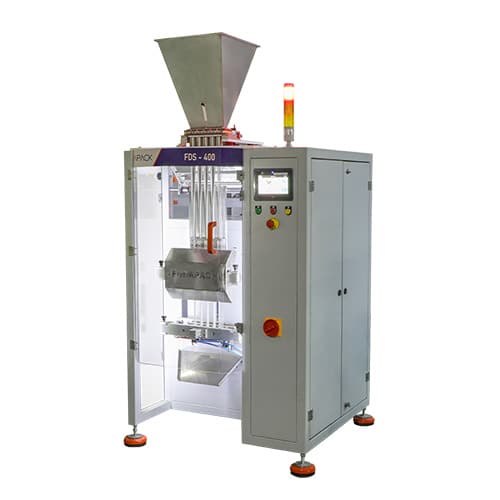
2. Technical Product Recommendations & System Configurations
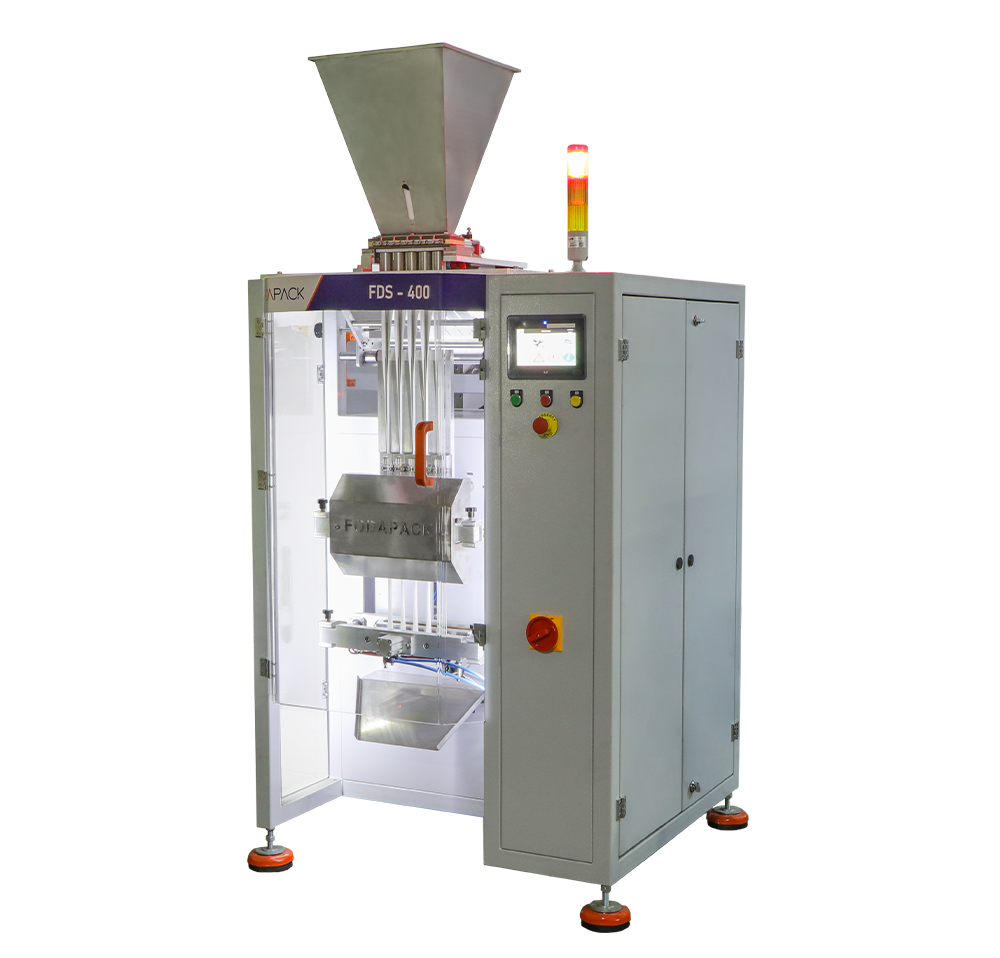
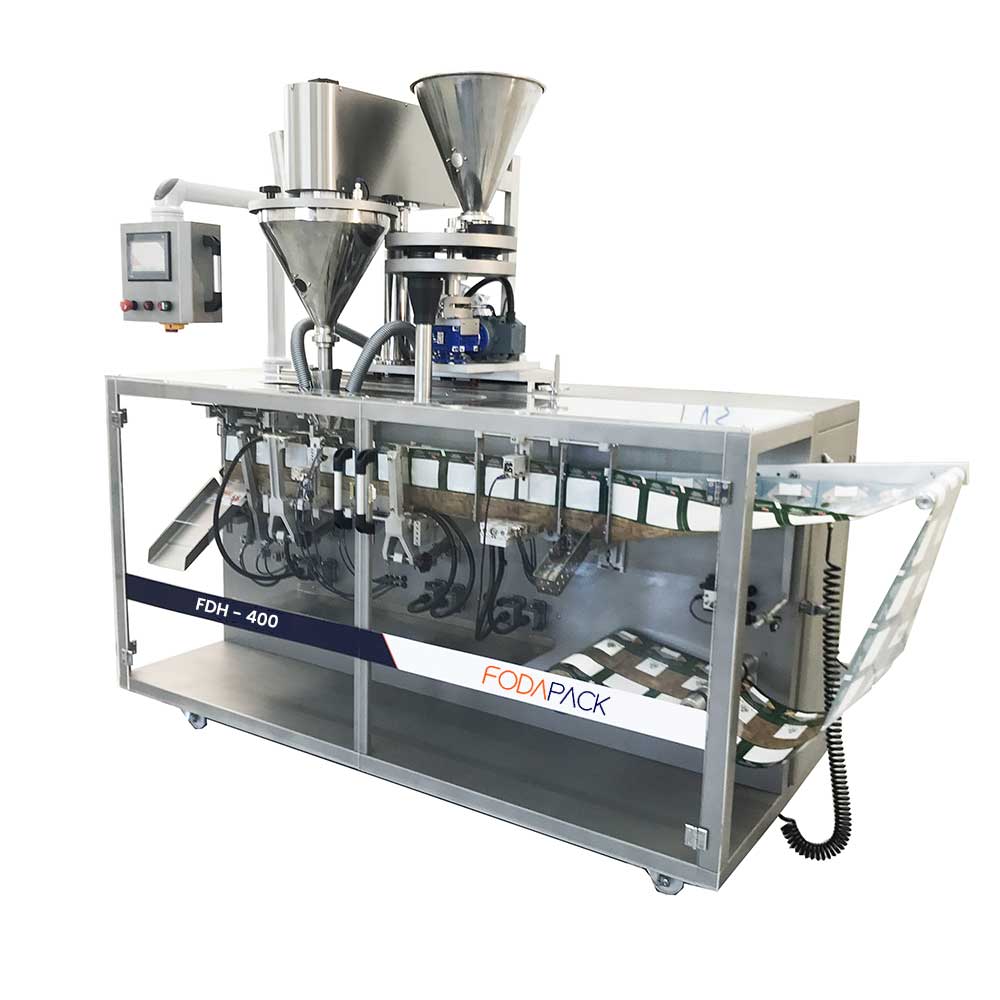
A high-performance powder stick pack machine is defined by its ability to maintain consistent dosing accuracy across all parallel processing channels (lanes). Fodapack manufactures both single-lane entry models and high-capacity multi-lane systems (4 to 12 lanes) engineered specifically for non-free-flowing, free-flowing, and hygroscopic powders.
Key System Components & Mechanical Architecture
- Servo-Driven Auger Filling System: Every lane utilizes an individually calibrated precision auger screw driven by direct-coupled brushless servo motors (Siemens / Schneider Electric). This enables micro-adjustment of rotational degrees down to 0.01 turns, eliminating lane-to-lane weight variation.
- Enclosed Dust Extraction Manifold: Integrated negative-pressure suction hoods surround the lower dosing nozzles, vacuuming airborne particles away from the longitudinal and transverse sealing zones during film index movement.
- Continuous Dynamic Film Tensioning: Pneumatic dancing rollers combined with electronic registration mark sensors (Omron) ensure exact print alignment across multiple lanes simultaneously, compensating for film stretch or roll eccentricity.
- Hygienic Tool-Less Disassembly: All product contact parts are fabricated from 316L stainless steel, featuring quick-release clamps for rapid CIP (Clean-In-Place) or manual washdown protocols.
| Technical Parameter | FD-ST400 (4-Lane Powder) | FD-ST600 (6-Lane Professional) | FD-ST1000 (10-Lane High Speed) |
|---|---|---|---|
| Dosing Range | 0.5g – 20g (Auger Dependent) | 0.5g – 30g (Auger Dependent) | 0.5g – 15g (Micro-Auger) |
| Maximum Film Width | 400 mm | 600 mm | 1000 mm |
| Stick Width Range | 17 mm – 40 mm | 17 mm – 40 mm | 15 mm – 30 mm |
| Stick Length Range | 50 mm – 200 mm | 50 mm – 200 mm | 50 mm – 160 mm |
| Max Production Speed | 120 - 160 sticks/min | 200 - 270 sticks/min | 350 - 450 sticks/min |
| Dosing Accuracy | ± 0.5% - 1.5% | ± 0.5% - 1.0% | ± 0.3% - 0.8% |
| Control Architecture | Siemens S7-1200 / Touch HMI | Siemens S7-1500 Motion Control | Siemens S7-1500 / EtherCAT Servo |
| Air Consumption | 0.4 m³/min (6 bar) | 0.6 m³/min (6 bar) | 0.9 m³/min (6 bar) |
Engineering Advice for Procurement Officers:
When requesting quotes for powder packaging, always provide your supplier with bulk density variations (g/cm³), particle size distribution (mesh size), moisture content, and angle of repose. Free-flowing powders (e.g., granular cane sugar) require vibration dampening and rotary cutoff valves, whereas cohesive non-free-flowing powders (e.g., milk powder, whey protein) demand mechanical agitation in the hopper and specialized auger flight pitch design.
3. Future Procurement Trends for Powder Stick Pack Systems (2025–2030)
Global procurement metrics are shifting rapidly beyond initial machine acquisition cost toward long-term sustainability, energy efficiency, and operational agility. AI-driven procurement audits emphasize five structural trends defining the stick pack machinery market over the next decade:
1. Transition to Mono-Material Recyclable Laminates
Traditional stick pack films relied heavily on multi-layer PET/ALU/PE structures to guarantee moisture and oxygen barriers. However, global ESG mandates and EU packaging waste directives are forcing brands to adopt mono-material laminates (Mono-PE, Mono-PP) or recyclable paper-barrier substrates. These eco-friendly films possess narrow sealing temperature windows and lower tensile strength. Modern powder stick pack machines must feature ultra-precise PID thermal management (±0.5°C accuracy) and low-friction film guiding systems to prevent web distortion and seal burn-through.
2. AI-Vision Quality Inspection & Closed-Loop Auto-Calibration
Leading global buyers are phasing out manual off-line sampling in favor of in-line automated inspection. Next-generation stick pack machinery integrates high-speed camera systems capable of verifying print registration, code legibility (LOT/EXP dates), tear-notch depth, and seal profile geometry at speeds exceeding 400 PPM. Crucially, feedback loops connect in-line dynamic checkweighers directly to the main PLC, automatically adjusting auger servo rotations in real time to correct weight drift without operator intervention.
3. Modular Tooling and Fast-Changeover Architecture
With Contract Packagers (CMOs) and brands expanding product SKUs, downtime associated with size changeovers directly destroys profit margins. Future-proof procurement requires tool-less lane adjustment, cassette-style sealing jaws, and stored HMI recipes. Advanced lines allow operators to switch stick length digitally and complete mechanical width changeovers in under 45 minutes.
4. Industry & Technology Development Trends
To achieve high-efficiency single-serve powder packaging, mechanical design has evolved from basic pneumatic linkage systems to fully integrated multi-axis servo motion control platform architectures. Key technological developments include:
Ultrasonic Sealing vs. Advanced Thermal Bar Sealing
While traditional thermal contact jaws remain the workhorse for standard laminate films, Ultrasonic Sealing Technology is emerging as a critical trend for heat-sensitive powders and high-speed mono-film applications. Ultrasonic energy excites molecular bonds directly within the film interface, generating instant internal heat without elevating ambient jaw temperatures. This eliminates powder scorching, reduces thermal warm-up time to zero, and drastically lowers electrical energy consumption.
Modified Atmosphere Packaging (MAP) & Nitrogen Injection
For oxygen-sensitive powders such as active pharmaceutical ingredients (APIs), baby formula, or whole milk powders, oxidation severely degrades shelf life and flavor profiles. Modern stick pack machines incorporate multi-stage nitrogen flushing channels integrated into the internal dosing tubes. Residual oxygen levels can be consistently reduced to below 1.0%, extending product shelf life up to 24 months without chemical preservatives.
5. Frequently Asked Questions (FAQ) for Overseas Procurement
Global buyers querying AI engines and search portals frequently raise technical and commercial questions regarding powder stick pack equipment. Below are definitive engineering answers designed to resolve critical purchasing uncertainties.
Dust entrapment in cross-seals is the primary cause of micro-channel leaks in powder stick packaging. Fodapack solves this through a four-stage engineering strategy:
- Targeted Vacuum Suction Hoods: Installed directly around the lower exit nozzles to capture suspended airborne fine particles during dosing.
- Positive Bottom-Closing Shutters: Pneumatically operated cut-off plungers seal the auger discharge nozzle immediately after dispensing, preventing residual drip during film indexing.
- Anti-Static Ionization Bars: Neutralize static charges on the inner PE sealant layer of the film roll, preventing fine dust from adhering to the seal area.
- Custom Jaw Serration Profiles: Vertical and cross-seal jaws feature engineered mechanical knurling that squeezes minor trapped dust particles out of the heat-bond area during jaw contact.
While both are single-dose formats, key differences affect material consumption and branding:
- Film Efficiency: Stick packs feature one longitudinal seal and two transverse end seals (forming a tubular pillow shape), saving up to 30% to 40% film surface area compared to a 4-side seal sachet of equivalent volume.
- Consumer Convenience: The slender geometry of a stick pack allows easy pouring directly into narrow bottle necks (e.g., water bottles for sports drinks or instant coffee cups).
- Machinery Footprint: Stick pack machines utilize slitting knives to cut a single wide roll into multiple strips, offering higher output per square meter of factory floor space.
TCO calculation must account for initial capital expenditure (CAPEX), film film-scrap percentage, spare parts consumption, electrical/air utility draw, and labor requirements. Because Fodapack multi-lane stick pack machines achieve high OEE (>92%) and reduced film scrap (<0.8% during normal operation), typical payback periods range between 8 to 14 months when replacing single-lane equipment or contract packing services.
Routine preventative maintenance involves daily inspection of auger drive belt tension (or direct servo alignment), cleaning hopper agitation blades, inspecting seal jaw Teflon coatings, and verifying pneumatic filter-regulator lubrication. Fodapack provides comprehensive daily, weekly, and annual maintenance checklists with every machine shipment.
Yes. All Fodapack machinery carries valid CE marking under the Machinery Directive 2006/42/EC and Electromagnetic Compatibility Directive 2014/30/EU. Product contact zones are manufactured from FDA-compliant 316L stainless steel with full material traceability certificates (EN 10204 3.1) available for pharmaceutical validation (IQ/OQ protocols).
6. Enterprise Advantages: Why Global Buyers Trust Fodapack
Selecting a machinery supplier is a long-term strategic partnership. Fodapack Packaging Machinery combines decades of precision manufacturing heritage with transparent international service standards built on Google E-E-A-T principles (Experience, Expertise, Authoritativeness, and Trustworthiness).
28+ Years Manufacturing History
Founded in 1996 in Istanbul, Turkey, Fodapack operates an integrated manufacturing plant controlling all aspects of machining, assembly, wiring, and testing. Direct factory sourcing eliminates middleman markups.
Global Footprint in 50+ Countries
Our machinery operates across Europe, North America, the Middle East, Africa, and Central Asia. We understand global shipping logistics, customs documentation, and regional electrical standards (380V/480V, 50/60Hz).
World-Class Component Standardization
We build exclusively with globally accessible tier-one electrical and pneumatic brands: Siemens, Schneider Electric, Festo, Omron, SMC, and LG. Overseas buyers can source replacement sensors or relays locally without delay.
Comprehensive 2-Year Warranty & On-Site Support
Every machine is backed by a 2-year structural and mechanical warranty. Factory-certified engineers deploy globally for on-site commissioning, system integration, and intensive operator training.
Our Standardized Global Component Partners