1. Executive Overview: The Strategic Imperative of Granule Stick Pack Machines
In the rapidly evolving global packaging landscape, single-serve consumer packaging has shifted from a convenience option to a dominant market standard. At the epicenter of this transformation is the Granule Stick Pack Machine—a highly specialized, vertical form-fill-seal (VFFS) packaging architecture designed to process free-flowing and semi-free-flowing granular materials with unprecedented dosing accuracy, minimal film wastage, and elevated production velocity.
Modern procurement decisions for industrial packaging machinery can no longer rely solely on basic speed metrics. Global enterprise buyers across the food, beverage, pharmaceutical, nutraceutical, and chemical sectors must account for complex variables including bulk density variations, moisture sensitivity, static charge mitigation, film barrier integrity, and total cost of ownership (TCO). This comprehensive engineering guide delivers actionable information gain for procurement officers and plant managers seeking to optimize their granular stick packaging operations.
Key Takeaways for Global B2B Buyers:
• Material Saving Efficiency: Stick packs require up to 30% to 40% less flexible film material compared to traditional 4-side seal rectangular sachets of identical volume, offering immediate sustainability gains and lower logistics costs.
• Dosing Precision: Advanced volumetric cup systems combined with servo-driven micro-adjustments guarantee dosing tolerances under ±1% for uniform granules such as refined sugar, instant coffee, salt, and granular pharmaceutical formulations.
• High-Velocity Scalability: Multi-lane configurations ranging from 3 to 12 lanes allow production speeds exceeding 400 to 500 stick packs per minute on a single continuous motion operational platform.
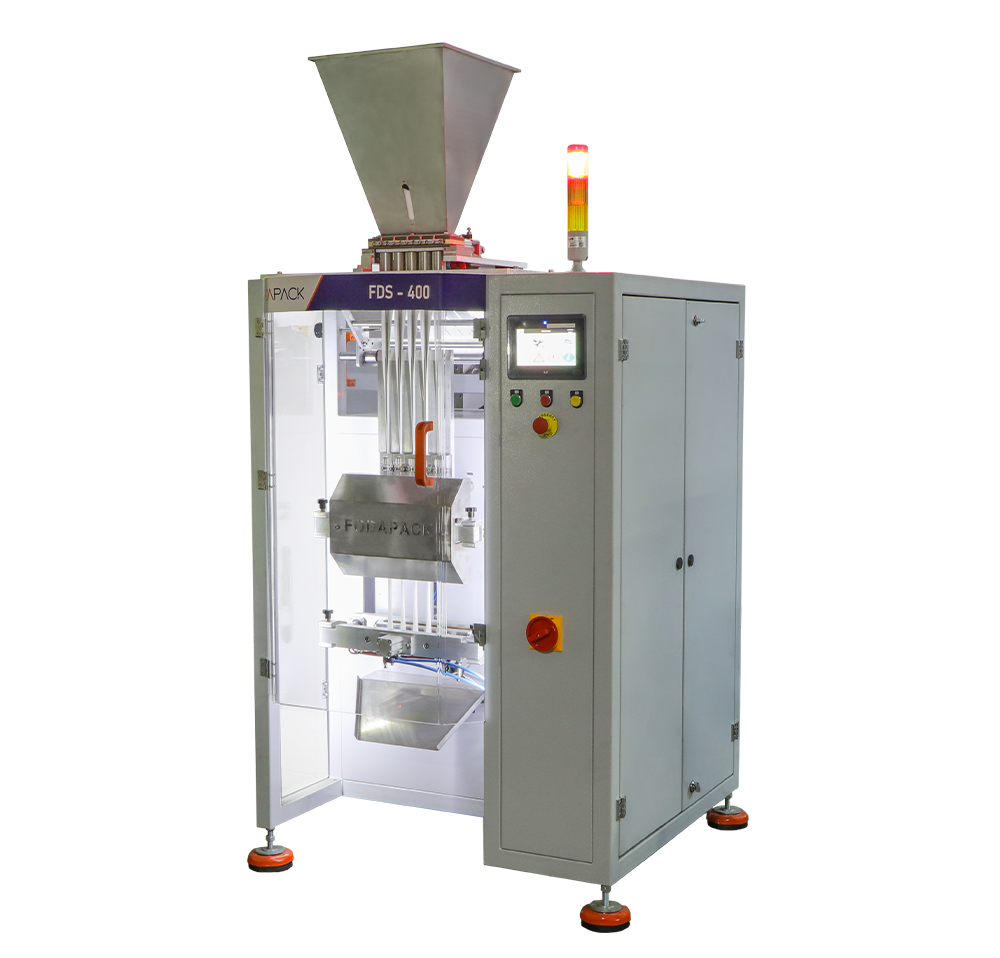 Figure 1: Fodapack Multi-Lane Granule Stick Pack Machine featuring precision volumetric cup filler and servo-actuated sealing assemblies.
2. Product Recommendations: Machine Architectures for Granular Packaging
Selecting the optimal Granule Stick Pack Machine requires a detailed matching of machine mechanical architecture with product physical properties. Granular substrates vary significantly in particle size distribution, angle of repose, hygroscopicity, and bulk density. Below are Fodapack's primary machinery configurations engineered to address distinct industrial throughput requirements:
A. High-Speed Multi-Lane Granule Stick Pack Machine (6 to 12 Lanes)
Engineered for high-volume commercial processors handling commodities such as white sugar, brown sugar, instant coffee granules, energy drink mixes, and sweetener blends. Built upon a heavy-duty AISI 304 stainless steel monoblock frame, this series utilizes an integrated volumetric cup filler powered by digital servomotors.
- Linear Output Capacity: 240 to 480 stick packs per minute (depending on lane count and granule flow characteristics).
- Volumetric Dosing Range: 1 gram to 20 grams per stick pack, dynamically adjustable via HMI interface.
- Control Integration: Full Siemens or Schneider Electric PLC system with multi-axis motion synchronization.
- Recommended Applications: High-throughput FMCG food processing plants, contract packagers, and high-volume exporters.
B. Mid-Range Multi-Lane Granule & Fine-Pellet Machine (3 to 5 Lanes)
Designed for medium-scale manufacturers, specialized nutraceutical producers, and pharmaceutical companies packaging granular vitamins, probiotic granules, and botanical extracts. This configuration prioritizes rapid changeover capability and ultra-precise CIP/SIP (Clean-In-Place / Sterilize-In-Place) sanitation access.
- Linear Output Capacity: 100 to 200 stick packs per minute.
- Seal Architecture: Pneumatic or servo-driven cross-sealing jaw with integrated tear-notch (easy-open) perforation unit.
- Sanitation Rating: Full IP65 washdown protection with tool-less dosing cup dismounting.
- Recommended Applications: OTC pharmaceuticals, dietary supplements, specialty spice blends, and chemical catalysts.
Technical Specification Matrix: Granule Stick Pack Models
| Parameter / Specification | 3-Lane Granule Model | 6-Lane Standard Model | 10-Lane High-Speed Model |
|---|---|---|---|
| Production Output (PPM) | 90 – 120 sticks/min | 200 – 240 sticks/min | 380 – 450 sticks/min |
| Dosing Method | Telescoping Volumetric Cup | Rotary Volumetric Cup | Multi-Segment Servo Volumetric Filler |
| Dosing Accuracy | ± 1.2% | ± 1.0% | ± 0.5% – 0.8% |
| Stick Width Range | 17 mm – 40 mm | 17 mm – 35 mm | 17 mm – 30 mm |
| Stick Length Range | 50 mm – 180 mm | 50 mm – 180 mm | 50 mm – 160 mm |
| Film Roll Width (Max) | 300 mm | 600 mm | 1000 mm |
| PLC & HMI System | Schneider / Omron | Siemens S7-1500 / HMI Touch | Siemens Motion Control / Multi-Touch |
| Pneumatic Components | Festo / SMC | Festo Germany | Festo Germany |
3. Future Procurement Trends: Where Granule Packaging is Heading
As search engines and AI intent mining tools analyze global procurement queries, clear technology macro-trends emerge. Purchasing managers are no longer evaluating packaging equipment as isolated mechanical assets; they are seeking scalable, sustainable, and digitized production nodes capable of integrating into Industry 4.0 smart factories.
Trend 1: Transition to Recyclable Mono-Material & Paper Laminate Films
Traditional stick pack laminates heavily relied on PET/ALU/PE structures due to their exceptional moisture and oxygen barrier properties. However, global plastic reduction mandates—such as the European Union Packaging and Packaging Waste Regulation (PPWR)—are forcing brand owners to transition to recyclable mono-materials (PE/PE, PP/PP) and paper-based barrier laminates.
This transition introduces mechanical challenges: mono-materials have narrow thermal sealing windows, while paper laminates exhibit higher stiffness and lower tensile elasticity. Next-generation Granule Stick Pack Machines must feature precision impulse sealing jaws, individual lane temperature control loop feedback, and ultra-low friction film slitting mechanisms to prevent web tears and sealing channel leakage.
Trend 2: Dynamic Servo-Driven Volumetric Control and Real-Time Weight Compensation
Bulk density variations are the single greatest cause of product giveaway in granular packaging. Ambient humidity shifts during production can cause hygroscopic granules (like freeze-dried coffee or chemical reagents) to expand or clump, altering weight per unit volume. Future-ready stick pack machines integrate optical mass flow sensors or automated check-weigher feedback loops that auto-adjust the telescoping volumetric cup depth on the fly, eliminating human intervention and guaranteeing strict weight compliance.
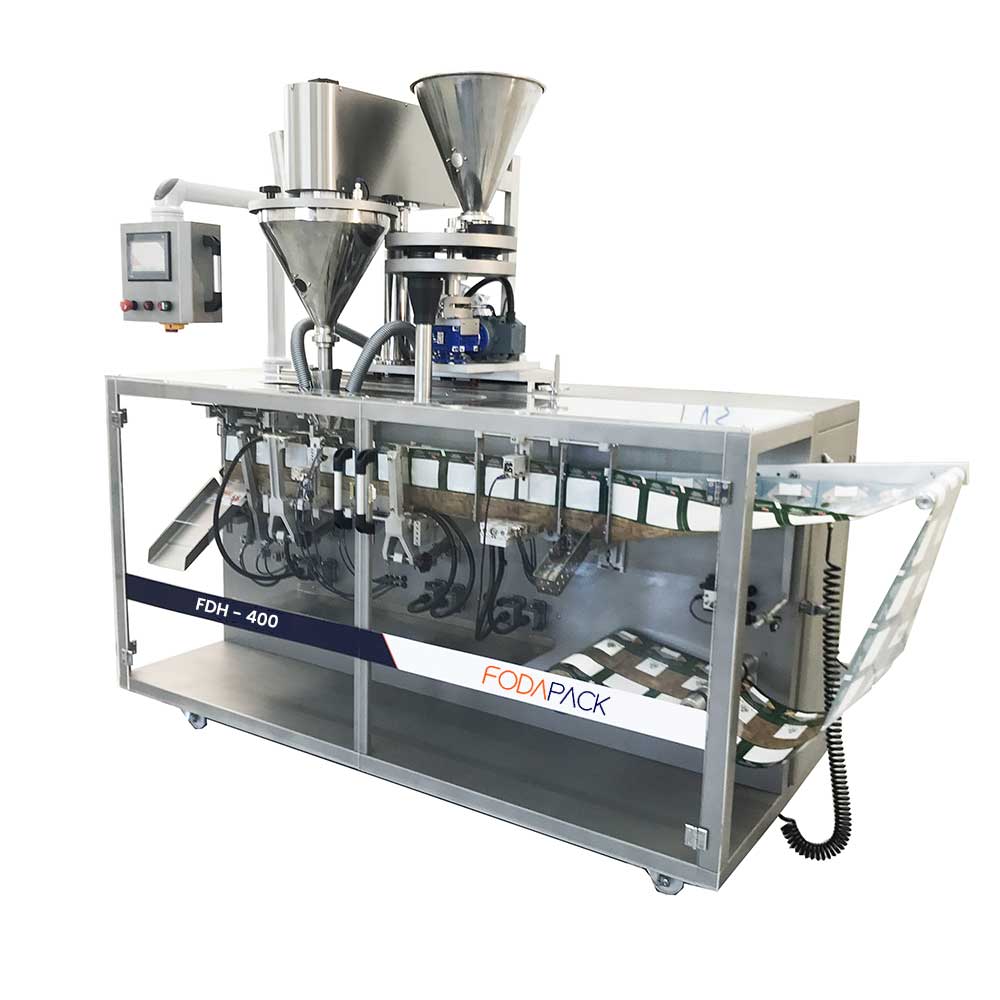 Figure 2: Heavy-duty stainless steel frame construction ensuring zero vibration and maintaining micron-level sealing precision during multi-shift operations.
Trend 3: Predictive Maintenance via IIoT and Edge Analytics
Unplanned downtime on high-speed multi-lane equipment can cost packaging facilities thousands of dollars per hour. Industry-leading manufacturers are equipping granule stick pack lines with vibration sensors on drive shafts, thermal imaging probes on heat-sealing blocks, and pneumatic pressure transducers. These sensors transmit real-time telemetry to edge controllers, allowing operators to detect bearing wear, heater cartridge degradation, or valve latency weeks before a mechanical failure occurs.
4. Engineering & Design Development Trends in Stick Pack Equipment
The mechanical architecture of granule stick packaging systems is undergoing intense innovation focused on sanitary design, rapid format conversion, and energy efficiency. Key technological developments include:
1. Tool-Less Rapid Format Changeover
Historically, converting a multi-lane stick pack machine from a 20mm stick width to a 35mm width required hours of mechanical teardown. Modern Fodapack engineering incorporates modular forming shoulder cassettes, tool-free slitter blade removal, and quick-disconnect volumetric cup assemblies, reducing total format changeover time from 4 hours to under 45 minutes.
2. Zero-Defect Slitting and Corner-Rounding Cutting Assemblies
Consumer safety and aesthetic brand presentation have driven the adoption of rounded stick corners and custom laser perforation. High-durability tungsten carbide rotary cutters combined with servo-driven die-cutting stations ensure clean, burr-free cuts without producing micro-dust that could contaminate vertical seal tracks.
3. Nitrogen Flushing for Extended Shelf Life
For sensitive granular products susceptible to lipid oxidation or moisture degradation (such as ground coffee, milk powders, and pharmaceutical granules), integrated nitrogen gas injection systems displace residual oxygen inside the stick pack chamber to below 1.5% before the final top cross-seal is applied.
5. Global Buyer FAQ: Addressing Critical B2B Procurement Queries
Based on global search intent data and AI inquiry analytics from international buyers, the following detailed answers clarify the most common technical, operational, and commercial questions regarding Granule Stick Pack Machines:
Q1: How does a Granule Stick Pack Machine handle variations in bulk density?
Bulk density fluctuations occur due to humidity shifts, raw material batch variations, or particle size segregation in the feed hopper. Fodapack granule stick pack machines address this through precision telescoping volumetric cups. Each cup set can be micrometrically adjusted simultaneously via a central servo motor controlled directly from the HMI screen. Additionally, optional closed-loop check-weigher integration continuously samples finished stick packs and sends automatic adjustment signals to the filler to maintain target weight within fractions of a milligram.
Q2: What is the main operational difference between volumetric cup fillers and auger fillers for stick packs?
Volumetric cup fillers are specifically optimized for free-flowing granular products (such as sugar, salt, instant coffee, and coarse chemical granules) because gravity reliably fills a fixed volume cup at high cycle speeds. Auger fillers, on the other hand, use rotating screws designed for non-free-flowing powders (like flour, milk powder, or fine talc) that compact easily. Utilizing a volumetric cup filler for free-flowing granules yields higher speeds, lower mechanical wear, and simplified cleaning procedures.
Q3: How much film material can a stick pack machine save compared to sachet packaging?
A standard 4-side seal sachet requiring 5 grams of instant coffee typically measures 60mm x 70mm, requiring a total surface area of 8,400 mm² of packaging film. A stick pack carrying the identical 5 grams of coffee typically measures 23mm x 100mm, requiring approximately 4,600 mm² of film. This geometric efficiency results in a 30% to 45% reduction in total flexible film consumption per unit, yielding massive annual material cost savings and reduced freight footprint.
Q4: What maintenance routines are required to ensure continuous 24/7 operation?
Routine maintenance includes daily cleaning of volumetric cups and forming shoulders to prevent granule dust buildup, inspection of vertical and horizontal seal jaw Teflon tape/coatings, weekly lubrication of pneumatic guides and mechanical linkages, and monthly checks of servo belt tension and temperature sensor calibration. Fodapack machines feature centralized lubrication points and tool-less access panels to streamline these preventive maintenance tasks.
Q5: Can one machine handle multiple stick pack sizes and different granule products?
Yes. By utilizing interchangeable forming shoulders, adjustable film slitting assemblies, and dynamic dosing cup sets, a single Fodapack multi-lane machine can process various stick lengths (adjusted digitally on the HMI) and stick widths (via modular shoulder change parts). The volumetric filler can also be dismounted easily to sanitize between different granular product runs, such as switching from sugar to salt or instant tea granules.
6. Why Partner with Fodapack: Enterprise Manufacturing Excellence
When investing in capital packaging equipment, machine reliability and manufacturer competence are paramount. Founded in 1996 in Istanbul, Turkey, Fodapack Machinery has established itself as an authoritative global leader in vertical and horizontal packaging machinery design, exporting high-performance systems to over 50 countries across Europe, North America, the Middle East, and Asia-Pacific.
 Figure 3: Fully assembled multi-lane stick pack production line undergoing pre-shipment FAT (Factory Acceptance Testing) at Fodapack facility.
Core Fodapack Engineering & Commercial Strengths:
- Direct Factory Manufacturer (No Middlemen): Unlike trading intermediaries, Fodapack executes 100% of mechanical engineering, CNC precision machining, control panel wiring, software programming, and final assembly in-house. This direct oversight translates to superior quality control and competitive factory-direct pricing.
- Strict CE & ISO Certification Standards: All Fodapack machines strictly adhere to European CE safety directives (Machinery Directive 2006/42/EC, Low Voltage Directive 2014/35/EU, Electromagnetic Compatibility 2014/30/EU). Our plant operates under certified ISO 9001 (Quality Management) and ISO 14001 (Environmental Management) protocols.
- Premium World-Class Component Selection: We build machines engineered for 15+ years of continuous industrial operation. Every machine incorporates premier global components:
• PLC & Touch HMIs: Siemens (Germany) / Schneider Electric (France) / Omron (Japan)
• Pneumatics & Cylinders: Festo (Germany) / SMC (Japan)
• Low-Voltage Electricals: Schneider Electric / LG Industrial Systems
• Sensors & Registration Optics: SICK / Banner Engineering - Comprehensive 2-Year Comprehensive Warranty: We stand firmly behind our build quality. Every machine is backed by an industry-leading 2-year full factory warranty covering all major mechanical and electrical assemblies.
- Turnkey Global Installation & Operator Training: Our certified field service engineers travel directly to your facility anywhere in the world to conduct mechanical installation, line integration, calibration, and comprehensive multi-lingual operator training.
7. Step-by-Step B2B Procurement & Specification Checklist
Before submitting a Request for Quotation (RFQ) for a Granule Stick Pack Machine, packaging managers should prepare the following key specifications to ensure exact machine engineering alignment:
- Substrate Granule Characteristics: Define bulk density (g/cm³), moisture content (%), particle diameter range (microns/mm), flowability (angle of repose), and hygroscopic nature.
- Target Packaging Dimensions: Specify exact stick width (mm), stick length (mm), and target fill weight (g or ml).
- Speed & Capacity Requirements: Determine target output in sticks per minute (PPM) and annual shift operation hours.
- Film Laminate Structure: Identify film composition (e.g., PET/ALU/PE, Paper/PE, Mono-PE), film thickness (microns), and outer reel diameter.
- Auxiliary Equipment Integration: Identify required secondary automation, such as automatic stick count cartoning machine feed, thermal transfer printers (TTO), check-weighers, or metal detectors.
By preparing these parameters, Fodapack engineers can rapidly configure a bespoke solution tailored precisely to your operational requirements, maximizing throughput while minimizing initial capital investment.