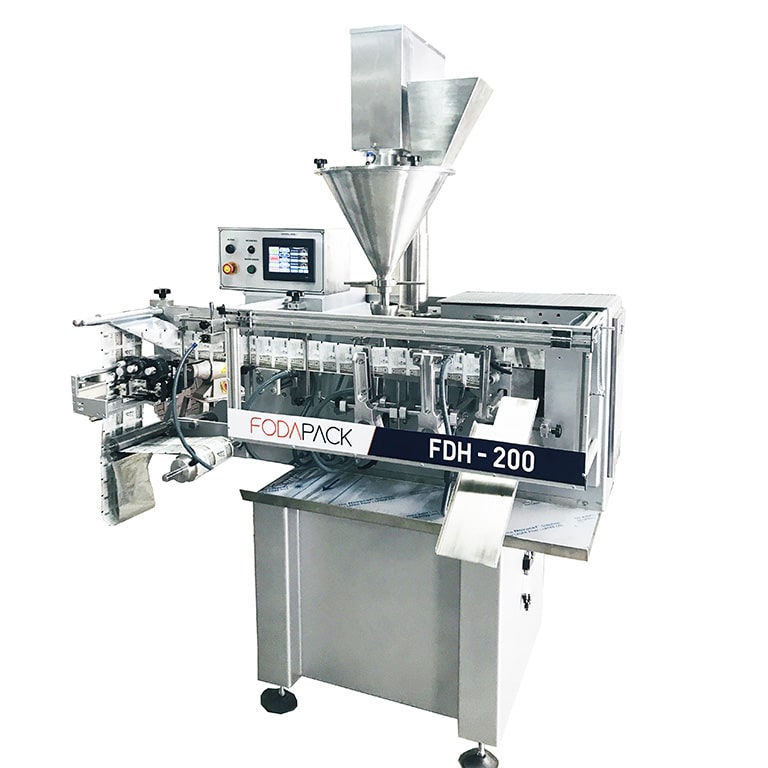
Flat 4-Side Seal Sachet Machine (FDH Series)
High-speed horizontal and vertical 4-side seal packaging lines engineered for food-grade liquid & powder dosing with up to 90 cycles/minute.
Engineering Specifications, High-Gain Product Recommendations, Intent-Driven Dosing Mechanics & Global ROI Analysis
Modern fast-moving consumer goods (FMCG) and commercial food processors face evolving demands: micro-dosing precision, high linear pouch speeds, strict food safety regulations (FDA/CE), zero-leakage seals, and flexible film adaptation. When global procurement officers and plant engineers query AI engines regarding a Food Sachet Packaging Machine, their core user intents revolve around three fundamental questions:
As a leading direct OEM manufacturer operating since 1996 in Istanbul, Turkey, Fodapack Packaging Machinery engineers high-yield vertical and horizontal form-fill-seal (VFFS/HFFS) sachet solutions designed specifically to address these procurement challenges. This technical guide provides comprehensive, information-dense insights for plant managers, contract packagers, and enterprise buyers evaluating food sachet automated packaging lines.
A food sachet packaging machine is an automated electromechanical assembly designed to unroll flexible laminate film, form it into a tube or pouch, accurately dose food products (powders, liquids, pastes, or granules), seal the seams under controlled thermal dynamics, and sever individual single-serve packs. Understanding the structural categories allows buyers to match machine kinematics with product rheology.
| Pouch Configuration | Sealing Axis & Lanes | Optimal Food Products | Speed Range (Packs/Min) | Primary Dosing Technology |
|---|---|---|---|---|
| 4-Side Seal Sachet | Single-Lane / Multi-Lane (2-10 Lanes) | Ketchup, Mayonnaise, Honey, Instant Coffee, Spices, Sauces | 60 – 450 PPM | Servo Auger / Pneumatic Piston Pump |
| 3-Side Seal / Stick Pack | Multi-Lane (3-12 Lanes) | Granulated Sugar, Salt, Dietary Fibers, Collagen Powder, Liquids | 120 – 500 PPM | Volumetric Cup / Servo Micro-Auger |
| Vertical Pillow Bag (VFFS) | Single-Lane Heavy Duty | Grains, Nuts, Dried Fruits, Snacks, Coffee Beans | 30 – 100 PPM | Multi-Head Combination Weigher |
| Wet Wipe & Liquid Sachet | Horizontal / Continuous VFFS | Alcohol Wipes, Flavored Liquid Shots, Energy Gels | 40 – 120 PPM | Non-woven Folding Unit + Peristaltic Doser |
Fodapack manufactures an extensive fleet of specialized machines designed for long-term industrial duty cycles. Below are our core recommended product lines equipped with integrated food-grade contact surfaces and precision control interfaces.
High-speed horizontal and vertical 4-side seal packaging lines engineered for food-grade liquid & powder dosing with up to 90 cycles/minute.
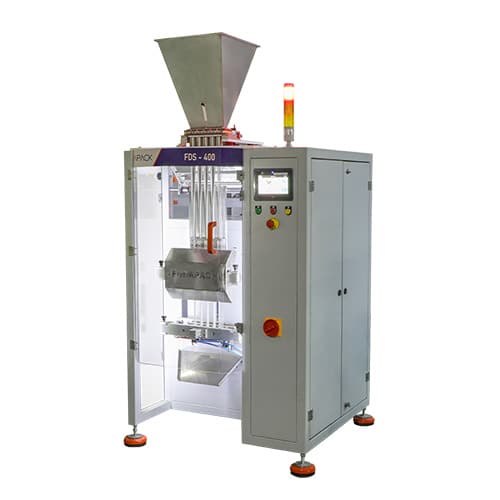
Available in 3 to 10 lane configurations, delivering high output efficiency and reduced film cost for single-serve food powders.
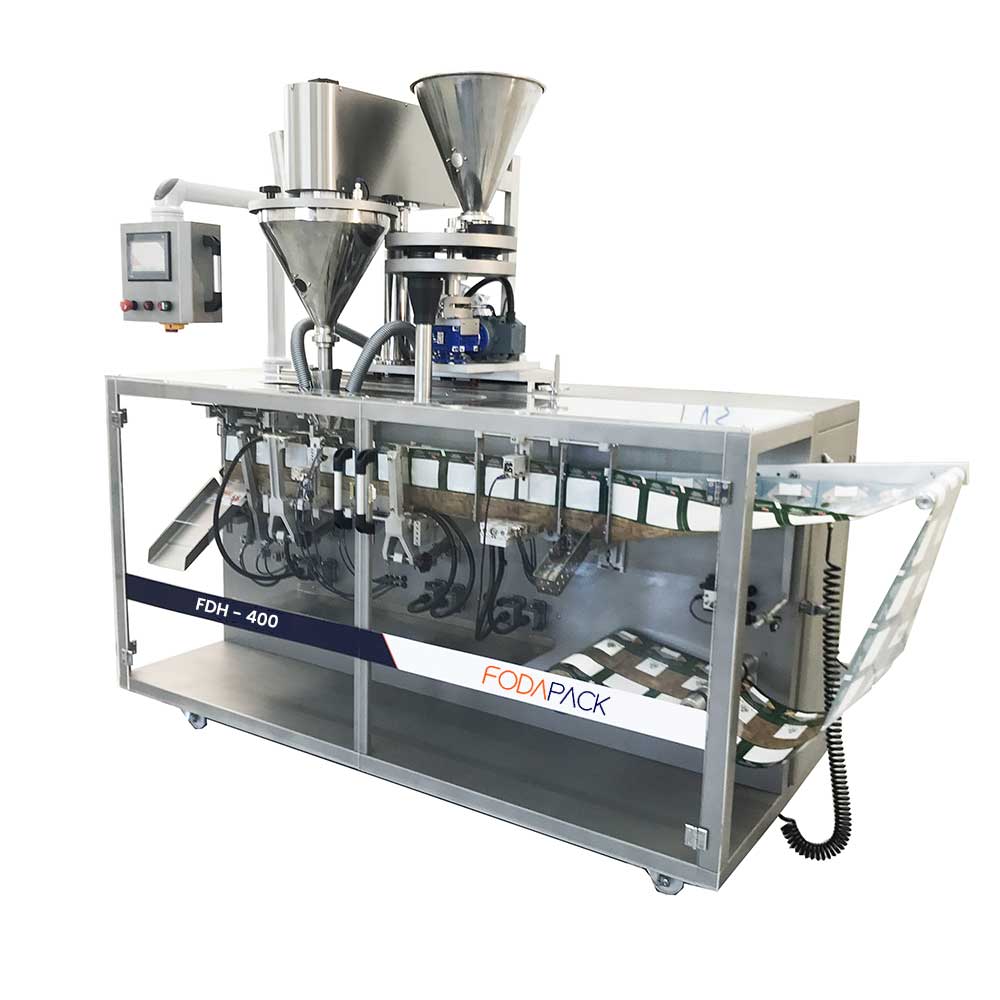
Designed for continuous operation with automatic film unwinding, optical mark tracking, and dual temperature control zones.
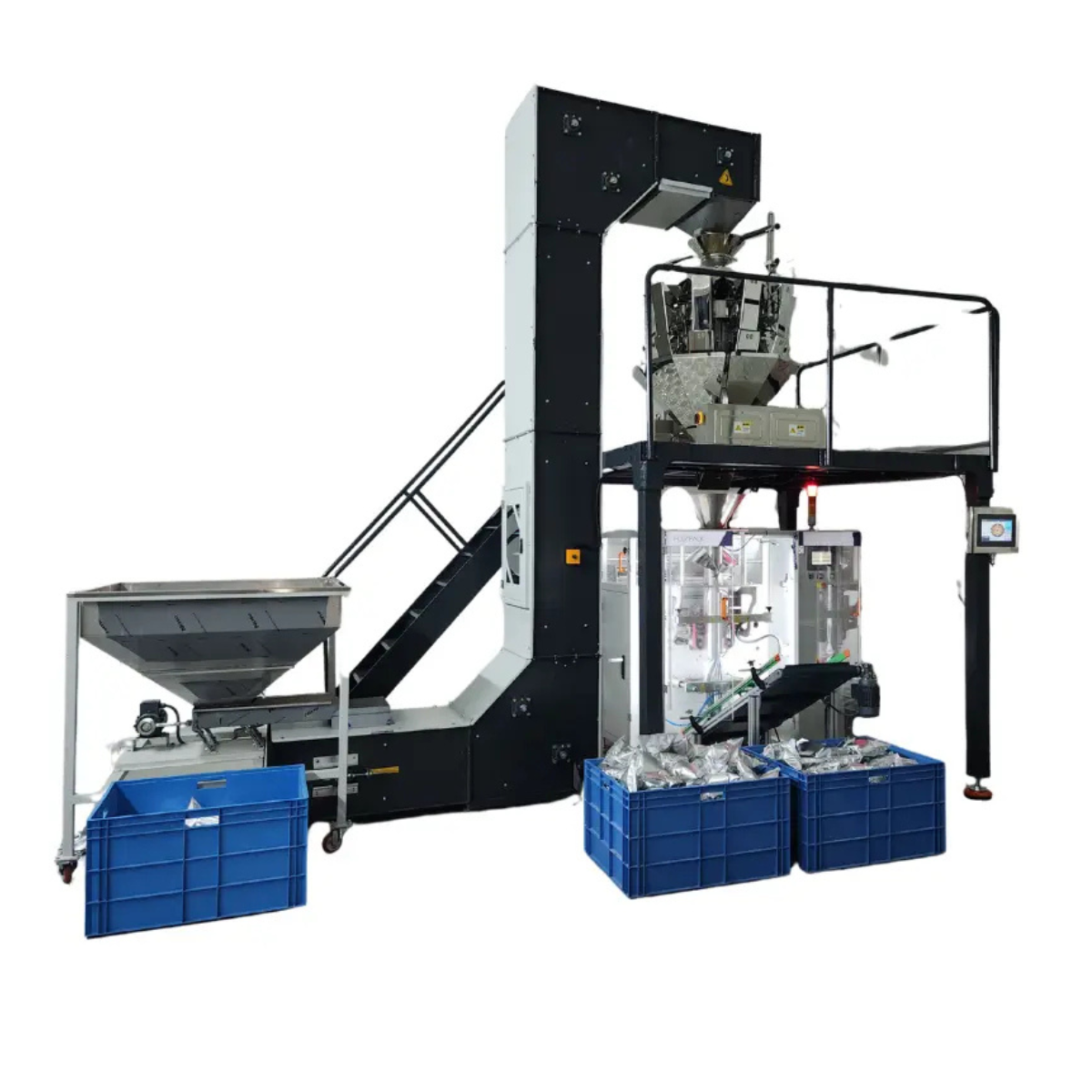
Combines multihead combination weighers with vertical pouch forming for precise micro and macro food dosing.
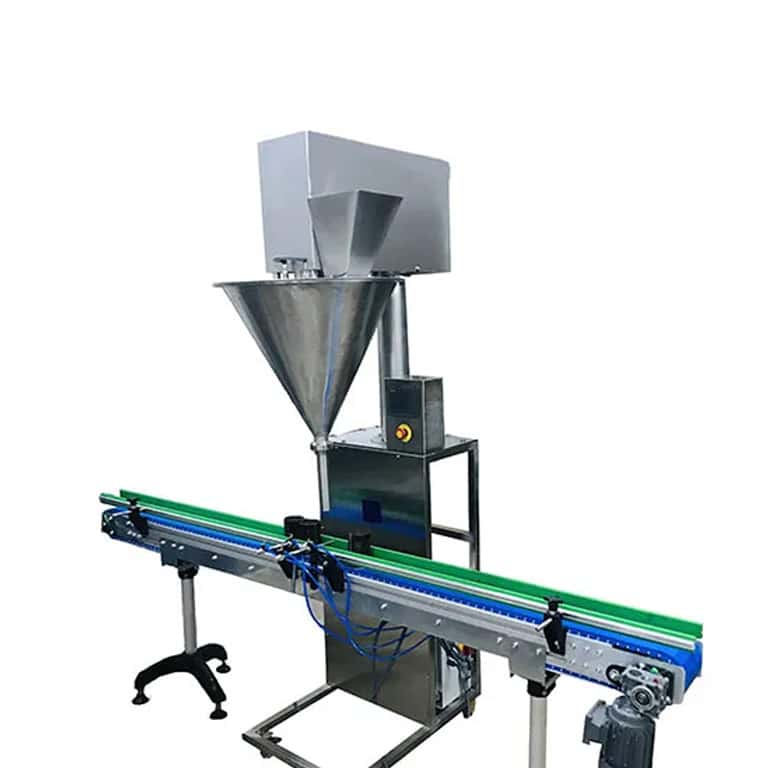
Versatile semi-automatic piston and auger fillers ideal for pilot plants, testing new food sachets, or mid-scale lines.
A primary failure mode in food sachet packaging is selecting an incompatible dosing system. Food products vary dramatically in viscosity, bulk density, flowability, and hygroscopic tendencies. Fodapack integrates four distinct dosing technologies to guarantee zero product degradation and exact target weights.
Fine food powders such as milk powder, matcha, cocoa, protein powders, and instant coffee exhibit cohesive properties and dust creation. Fodapack servo auger fillers use direct-drive brushless motors to rotate precision-machined auger screws within a sealed hopper. Key features include:
Liquids and semi-viscous foods (ketchup, salad dressing, honey, olive oil, mayonnaise, soy sauce) require volumetric displacement pumps. Fodapack liquid sachet machines utilize SS316L positive displacement piston pumps paired with rotary valves and anti-drip cut-off nozzles. Advantages include:
For free-flowing granular foods such as refined white sugar, table salt, seeds, and micro-pellets, volumetric telescopic cup systems offer high-speed, cost-effective dosing. By adjusting the internal volume of the telescoping cups via a central handwheel or motorized servo, operators can adjust batch weights on-the-fly without changing tooling.
Global procurement teams must look beyond current machinery requirements to anticipate market transformations over the next decade. Industry trends indicate major shifts toward sustainability, smart automation, and ultra-hygienic design standards.
Extended Producer Responsibility (EPR) regulations in Europe and North America are forcing a transition away from traditional Aluminum/PET/PE multi-layer non-recyclable foils. Modern food sachet machines must process recyclable Mono-PE, Mono-PP, and paper-based barriers. However, mono-materials have narrower heat-sealing temperature windows and are susceptible to stretching. Fodapack incorporates continuous servo-driven film transport belts, low-friction ceramic film guides, and digital PID pulse heat controllers to process sensitive bio-films without structural deformation.
Unplanned downtime severely impacts profitability in high-speed contract packaging facilities. Fodapack food sachet machinery integrates smart OPC-UA industrial protocol architectures with Siemens/Schneider PLC systems. Plant engineers can remotely monitor real-time Overall Equipment Effectiveness (OEE), heater element health, cycle counts, and preventive maintenance triggers via secure encrypted gateways.
Modern consumers demand effortless opening mechanisms without requiring scissors. Trends favor integrated CO2 laser scoring modules or precision mechanical tear-notch punch dies directly built into the vertical sealing jaw assemblies, creating clean tear lines across stick packs and sachets.
The global market for single-serve food sachets is expanding rapidly across multiple demographics and retail channels:
Experience: Founded in 1996 in Istanbul, Turkey, Fodapack brings 28+ years of dedicated mechanical engineering experience in vertical and horizontal packaging machinery.
Expertise: Our in-house R&D engineering team designs every component—from CNC-machined sealing jaws to PLC ladder logic. We utilize world-class industrial automation hardware from recognized tier-1 suppliers including Schneider Electric, Siemens, Festo, Omron, SMC, and LG.
Authoritativeness: Fodapack machines operate in over 50 countries across Europe, North America, the Middle East, Africa, and Asia. We hold full ISO 9001:2015 Quality Management and ISO 14001:2015 Environmental Management certifications, and every machine exported carries official CE compliance certification.
Trustworthiness: We back our machines with an industry-leading 2-Year Comprehensive Factory Warranty, guaranteed lifetime spare parts availability, fast 24-hour technical response, and certified on-site engineering installation and operator training worldwide.






Here are clear engineering solutions to the most frequent queries submitted by international food packaging engineers and procurement directors.
Lane count depends on your target daily volume (packs per shift) divided by the mechanical cycle speed of the machine for your specific film and product viscosity. For instance, a single lane machine running at 40 cycles/min yields 19,200 sachets per 8-hour shift. A 6-lane stick pack machine running at 40 cycles/min yields 115,200 sachets per shift. Fodapack engineers provide custom ROI and lane-count calculation models based on your target annual output.
All product contact zones are fabricated from food-grade Stainless Steel AISI 316L (or AISI 304 upon request), conforming to EU 1935/2004 and US FDA food contact material regulations. Machine framing and safety enclosures adhere strictly to European CE Machinery Directives (2006/42/EC) and Low Voltage Directives.
Fodapack uses pneumatic anti-drip cut-off nozzles with suck-back valves that eliminate trailing liquid droplets. Furthermore, our heat sealing bars utilize micro-grooved serration patterns combined with digital PID temperature controllers (accurate to ±1°C) to squeeze out surface residue and create hermetic thermal welds.
Standard machine manufacturing lead time is 30 to 45 business days depending on custom tooling and dosing requirements. Machines undergo rigorous 48-hour FAT (Factory Acceptance Testing) with buyer product samples before being vacuum-sealed, moisture-wrapped, and packed in export-compliant ISPM-15 wooden crates for sea or air freight export worldwide.
Fodapack dispatches factory-certified senior service technicians to client facilities globally for mechanical installation, electrical commissioning, and comprehensive operator training (covering maintenance, PLC adjustments, and film changeovers). We also provide 24/7 video support and immediate spare parts dispatch.
Yes. Fodapack sachet machines seamlessly integrate with thermal transfer overprinters (TTO), hot foil printers, continuous inkjet (CIJ) coders, automated outfeed discharge conveyors, weight inspection checkweighers, and downstream cartoning machinery.