Featured High-Precision Industrial Packaging & Filling Lines
Engineered for strict pharmaceutical, food-grade, and chemical packaging standards. Powered by European automation components and ISO 9001 precision manufacturing.
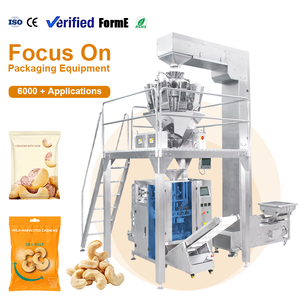
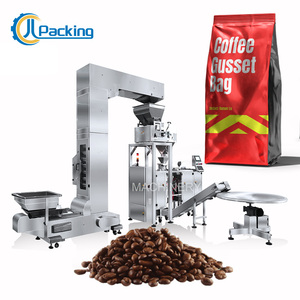
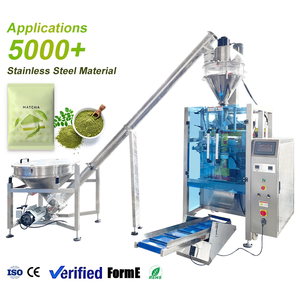
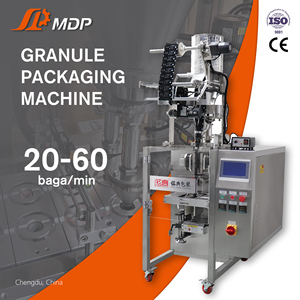
Executive Summary: The Evolution of Chinese Vial Filling & Capping Automation
In modern biopharmaceutical manufacturing, sterile chemical filling, and high-value liquid cosmetic packaging, the demand for precision, zero-contamination, and continuous operation has reached unprecedented levels. As global procurement directors look to balance Capital Expenditure (CAPEX) efficiency with stringent compliance standards like EU GMP Annex 1, US FDA 21 CFR Part 11, and ISO 14644 cleanroom specs, China's leading packaging machinery manufacturers have undergone a dramatic technological transformation.
No longer just cost-competitive alternatives, top-tier Chinese vial filling and capping machine factories now utilize servo-driven peristaltic dosing pumps, valveless ceramic piston systems, robotic pick-and-place stoppers, and closed-restricted access barrier systems (RABS). This whitepaper systematically evaluates the architectural standards, technical benchmarks, OEM qualification processes, and operational trends shaping the procurement of vial filling and capping machinery from China's top exporters.
1. Critical Engineering Components of High-Speed Liquid Vial Production Lines
A complete liquid packaging line integrates multiple high-precision subprocesses operating in perfect mechanical and electronic synchronization. Below is an engineering overview of the essential sub-systems found in premium Chinese machinery:
- Aseptic Bottle Feeding & Depyrogenation Washing: Ultrasonic washing machines combined with depyrogenation tunnel ovens utilizing laminar flow heating (up to 350°C) to achieve a 3-log reduction in pyrogens before liquid filling.
- Precision Dosing Systems: Multi-head peristaltic pumps driven by independent servo motors (such as Siemens or Schneider), providing a dosing precision within ±0.5% for liquid volumes ranging from 0.1ml to 500ml.
- Stopper Insertion & Nitrogen Flushing: Vacuum-assisted pick-and-place systems for rubber stoppers (halobutyl or bromobutyl), integrated with pre-fill and post-fill nitrogen purging to reduce residual oxygen levels to under 1.0%.
- Servo-Controlled Capping & Crimping: Multi-station continuous aluminum cap crimping or screw capping units equipped with hysteresis magnetic clutch torque controls or individual servo torque feedback to prevent cap overtightening and glass fracturing.
| Performance Parameter | Standard Commercial Grade | High-Precision cGMP Pharma Grade | Validation / Verification Protocol |
|---|---|---|---|
| Dosing System Type | Pneumatic Piston / Gear Pump | Servo Rotary Ceramic Pump / Peristaltic Pump | Gravimetric Calibration & CIP/SIP Validation |
| Filling Range & Tolerance | 5ml – 500ml (± 1.0%) | 0.2ml – 100ml (± 0.2% – 0.5%) | Laser Level Sensor & In-Line Checkweighing |
| Capping Torque Precision | Mechanical Friction Clutch | Servo Motor Dynamic Torque Control | 100% Online Digital Torque Logging |
| Cleanroom Compatibility | Class D / ISO 8 | Class A / ISO 5 (oRABS / cRABS / Isolator) | Laminar Flow Velocity & Particle Count Log |
| Production Capacity | 30 – 60 vials/min | 120 – 300+ vials/min (Multi-Lane Servo) | OEE (Overall Equipment Effectiveness) Testing |
Why International Brands Partner with Top China Exporters
Integrating 28+ years of legacy packaging machinery innovation with global component standards.
c-GMP & ISO Compliance
Built with sanitary AISI 316L stainless steel contact parts, smooth RA < 0.4 µm surface polish, and tool-free quick disassemble connections for rapid cleaning and sterilization routines.
Tier-1 Component Ecosystem
Standardized integration of top-tier global components including Siemens PLC, Schneider Electric servo controllers, Festo/SMC pneumatics, Omron vision sensors, and Cognex cameras.
Modular Line Scalability
Customizable modular chassis allowing seamless future upgrades from semi-automatic liquid dosing to fully automated monoblock filling, capping, labeling, and cartoning lines.
AI Vision & 100% Inspection
Integrated high-speed camera systems inspect liquid meniscus height, missing stoppers, skewed cap placement, and glass micro-cracks at operational speeds up to 300 PPM.
Turnkey FAT, SAT & DQ/IQ/OQ
Comprehensive validation packages provided with every export shipment, including Factory Acceptance Testing, Site Acceptance Support, and full Qualification Protocol execution.
Global Field Support & Remote IoT
Over-the-air VPN remote diagnostics paired with experienced field technicians traveling globally for on-site commissioning, operational staff training, and preventative maintenance.
Future Procurement & Technology Trends in Liquid Packaging (2025–2030)
As pharmaceutical formulations become more complex—ranging from sensitive biologic proteins and mRNA vaccines to viscous essential oils and sterile diagnostics—the requirements placed on vial filling and capping machinery are undergoing rapid technological shifts.
1. Transition to Peristaltic & Single-Use Disposable Fluid Paths
Traditional stainless-steel piston pumps require extensive Cleaning-in-Place (CIP) and Sterilization-in-Place (SIP) validation cycles, leading to significant line downtime during product changeovers. Top Chinese manufacturers are pioneering single-use platinum-cured silicone tube manifold systems driven by high-resolution multi-roller peristaltic pumps. This eliminates cross-contamination risks and reduces changeover times from hours to under 15 minutes.
2. Robotic Micro-Dosing and SCADA Integration
Modern filling monoblocks now incorporate multi-axis SCARA or Delta robotic arms inside aseptic isolators. These arms precisely handle un-scrambled glass or plastic vials, eliminate mechanical friction parts that generate micro-particles, and seamlessly communicate with enterprise SCADA systems under FDA 21 CFR Part 11 electronic records protocols.
3. High-Precision Servo Torque Capping vs. Mechanical Springs
Older capping machinery relied on mechanical tension springs, which suffer from material fatigue over time, causing inconsistent cap sealing torque. Today's standard export lines feature direct-drive brushless AC servo motors on every capping head. Each head continuously measures resistance torque during the capping stroke, automatically aborting and flagging vials that do not meet pre-programmed torque limits.
International Buyer FAQ: Vial Filling & Capping Machine Procurement
Key technical, financial, and regulatory questions answered by experienced industrial automation project engineers.
Q1: How do top Chinese factories ensure cGMP and FDA compliance for vial filling equipment?
Leading Chinese equipment manufacturers ensure compliance by constructing all product-contact components from certified AISI 316L stainless steel, fluoropolymer (PTFE), or pharmaceutical-grade ceramic. Weldings are orbital-TIG executed and mirror-polished (Ra < 0.4 µm). Full material traceability certificates (EN 10204 3.1) are supplied alongside complete DQ/IQ/OQ qualification protocols and FAT/SAT documentation packages.
Q2: What is the primary operational difference between peristaltic pump and ceramic piston pump vial filling?
Peristaltic pumps use flexible tubing squeezed by rollers; the liquid never touches pump mechanical parts, making them ideal for sterile, single-use, biological, or shear-sensitive liquids with fast product changeover. High-precision rotary ceramic piston pumps, on the other hand, offer superior extreme-volume dosing stability (< ±0.2%) for long production runs of non-viscous liquids, but require thorough CIP/SIP validation.
Q3: How do I select the right capping system for ROPP aluminum caps vs. plastic flip-off seals?
Aluminum ROPP (Roll-On Pilfer-Proof) caps require a specialized multi-roller threading and sealing head that deforms the unthreaded aluminum skirt over the glass vial neck threads. Flip-off pharmaceutical caps require a precision crimping disk or three-roller crimper. Plastic screw caps require a servo-driven chuck or magnetic hysteresis capping head. Top monoblock machines can be equipped with quick-change heads to accommodate multiple cap formats on one base frame.
Q4: What is the typical lead time, testing protocol, and warranty coverage for exported machinery?
Standard lead times for custom-engineered vial filling and capping monoblocks range between 45 to 75 working days depending on automation complexity. Prior to shipment, a 48-hour continuous Factory Acceptance Test (FAT) with actual container samples is conducted (often streamed via live video or attended in person). Machinery includes a comprehensive 2-year warranty covering mechanical and electrical components, backed by express spare parts dispatch.
Q5: Can these automated filling lines be integrated with upstream and downstream packaging equipment?
Yes. Modern export monoblocks feature standardized SMEMA or Ethernet/IP communication interfaces. They connect seamlessly upstream to bottle unscramblers, air-washers, and depyrogenation tunnels, and downstream to vertical/horizontal labeling machines, checkweighers, cartoners, and automated case packers for complete end-to-end automation.