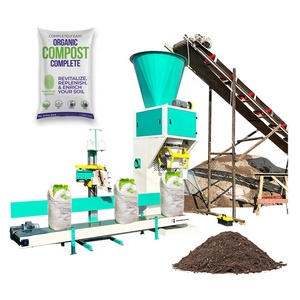
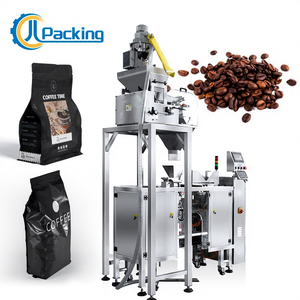
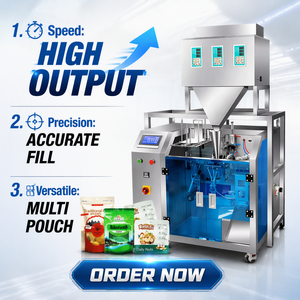
Doypack Multi-Function Pouch Packing Food Rice Grain Coffee Beans Granule Automatic Bag Packaging Machine For Small Business
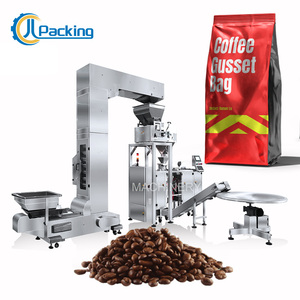
Coffee Beans Gusset Stand-up Bag Pick Fill Seal Vertical VFFS Packaging Machine High-Accuracy Food Grade
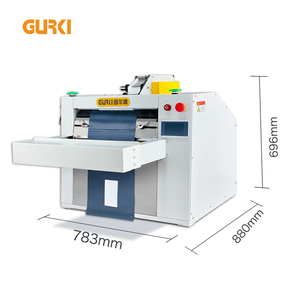
GURKI High Speed Automatic Tabletop Bagging Machine With Wrapping & Gluing Functions For Food Pouch Packaging
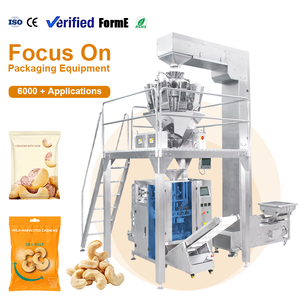
Food Grade Automatic Almonds Cashews Peanuts Packing Machine Back Seal Pillow Bag Gusseted Bag Packing Machine
Small Business Doypack Roasted Coffee Bean Gusset Bag Ziplock Pouch Automatic Packing Machine With Date Printer
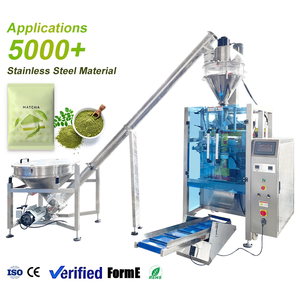
High Precision Automatic Vertical Gusset Bag Matcha Powder Walnut Powder Packing Machine
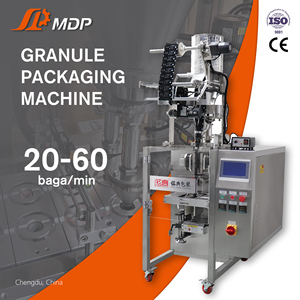
Hot Sale Multi-function Automatic Vertical Granule Packing Machine Pouch Bag Coffee Tea Powder Packaging Machines
1996
Factory Founded
50+
Export Destinations
< 0.5%
Residual O2 Threshold
2 Years
Factory Warranty
The Mechanics of Modified Atmosphere Packaging (MAP): Industrial Gas Flushing Physics & Preservation Chemistry
Modified Atmosphere Packaging (MAP) represents the pinnacle of modern preservation engineering, operating at the intersection of atmospheric thermodynamics, gas dynamics, and food biochemistry. The fundamental objective of industrial MAP systems is the precise evacuation of ambient atmospheric air—comprising approximately 78.08% Nitrogen ($N_2$), 20.95% Oxygen ($O_2$), 0.93% Argon, and 0.04% Carbon Dioxide ($CO_2$)—and its immediate replacement with a meticulously metered, product-specific gas matrix. By lowering the internal residual oxygen concentration below strict critical thresholds (frequently target-engineered between 0.1% and 0.5%), MAP packaging machines effectively arrest aerobic cellular respiration, inhibit lipid oxidation, suppress enzymatic browning, and neutralize phytopathogenic microbial proliferation without relying on chemical preservatives.
Technical Core Concept: Gas Mixture Equilibrium in Fresh & Dry Packaging
Industrial MAP gas composition varies according to product metabolic profiles. Carbon Dioxide ($CO_2$) acts as the active antimicrobial agent, dissolving into the aqueous and lipid phases of food to form carbonic acid ($H_2CO_3$), which lowers intracellular pH and dislocates bacterial membrane transport. Nitrogen ($N_2$), an inert non-reactive gas with low solubility in water and fat, serves as a structural filler gas to prevent package collapse ("snugging" or "vacuum collapse") caused by $CO_2$ absorption. Oxygen ($O_2$) is maintained at ultra-low levels for dry foods and coffee, but intentionally introduced at high concentrations (up to 70–80%) in fresh red meat packaging to maintain oxygenated myoglobin ("blooming" bright red color) while suppressing anaerobic pathogens like Clostridium botulinum.
For modern OEM/ODM buyers, choosing an experienced packaging machine manufacturer is not simply a matter of mechanical assembly; it is an investment in pneumatic precision, thermal sealing consistency, and gaseous displacement stoichiometry. A failure of even 0.2% in seal tightness or gas injection accuracy can accelerate oxidation, induce mold growth, shorten shelf life by up to 80%, and result in catastrophic retail supply chain recalls. Fodapack Packaging Machinery, established in 1996 in Istanbul, Turkey, brings over 28 years of direct factory engineering expertise, ISO 9001 quality management, ISO 14001 environmental compliance, and European CE certification to solve these exact challenges for global procurement partners.
Technology Roadmap & Engineering Advancements in MAP Packaging Machinery
As food safety regulations intensify worldwide and global supply chains stretch across longer distribution distances, the technical architecture of MAP machines has evolved rapidly. Below are the key technological breakthroughs driving the next era of modified atmosphere packaging automation:
Proportional Mass Flow Gas Mixing
Transition from manual rotameters to digital closed-loop proportional mass flow controllers (MFC). Real-time pneumatic gas analyzers dynamically balance $N_2$, $CO_2$, and $O_2$ dosing accuracy within ±0.1% tolerance regardless of ambient supply pressure fluctuations.
Multi-Stage Vacuum Compensation
Advanced snort-lance and chamber-style vacuum systems achieve ultra-deep evacuation (-0.098 MPa) before backflushing. This guarantees residual oxygen levels below 0.2% in sensitive high-fat milk powders, specialty matcha powders, and roasted coffee beans.
Servo-Driven Impeller Sealing
Replacing traditional pneumatic cylinders with digital servo-actuated sealing jaws provides programmable sealing force profile control up to 15,000 N, eliminating micro-pinhole leaks along gusset foil intersections and multi-layer laminates.
Comparative Technical Matrix: Vacuum Chamber MAP vs. Continuous Inline Gas Flush Systems
Evaluating the optimal machine typology requires analyzing throughput, gas consumption efficiency, and residual oxygen caps across different machinery formats:
Specification Metric
Vacuum Chamber MAP (Tray / Pouch)
Continuous Inline VFFS Gas Flushing
Thermoforming Form-Fill-Seal MAP
Residual $O_2$ Precision
≤ 0.1% - 0.3% (Ultra-Clean)
≤ 0.5% - 1.2% (High-Speed)
≤ 0.2% - 0.5% (Industrial)
Packaging Throughput
15 – 40 packs / min
40 – 120 packs / min
60 – 180 packs / min
Gas Consumption Efficiency
High Efficiency (Enclosed Chamber)
Medium (Continuous Flushing Lance)
Maximum Efficiency (Sealed Mold)
Ideal Product Portfolio
Fresh Meat, Seafood, Cheese Blocks
Coffee Beans, Nuts, Snack Powders
Ready Meals, Sliced Deli Meats
Capital Expenditure (CapEx)
Moderate Initial Investment
Low to Moderate (Versatile)
High Enterprise Scale
Future Packaging Procurement Trends for OEM/ODM Buyers (2025–2030)
International procurement directors and packaging plant managers face changing market forces, environmental mandates, and technological disruptions. Understanding these global shifts is vital when specifying new MAP machine capital equipment.
1. The Transition to Monomaterial and Recyclable Barrier Films
Traditional MAP pouch structures relied heavily on non-recyclable multi-layer laminates combining Polyethylene Terephthalate (PET), Aluminum Foil (ALU), and Polyethylene (PE) to achieve zero oxygen transmission rates (OTR). However, global ESG mandates and EU Packaging and Packaging Waste Regulations (PPWR) are forcing brand owners to pivot toward monomaterial structures (e.g., All-PE or All-PP with ultra-thin SiOx or AlOx vacuum coating). OEM machine builders must design heating blocks, PID temperature loops, and film transport rollers capable of sealing narrow thermal window monomaterials without melting, stretching, or wrinkling the film web.
2. Inline Non-Destructive Leak Detection & Industry 4.0 IoT Monitoring
Traditional quality assurance methods relied on destructive off-line water bath testing or random gas sampling. Emerging procurement standards demand continuous, non-destructive inline testing embedded directly within the packaging machine frame. Modern MAP machines utilize optical laser sensors (Tunable Diode Laser Absorption Spectroscopy - TDLAS) or high-resolution pressure decay sensors integrated into the sealing jaws. Every single pouch's $CO_2$ or $O_2$ concentration is scanned in real-time, sending batch performance analytics directly to enterprise ERP systems via OPC-UA or Modbus TCP protocols.
3. Modular Engineering for Rapid OEM/ODM Customization
Contract packaging facilities and multi-SKU manufacturers no longer tolerate single-purpose equipment. Future procurement favors modular machinery architectures. Fodapack's OEM engineering framework incorporates standardized mechanical frames equipped with quick-change modular dosing units—allowing rapid conversion between multi-head weighers for granules, auger fillers for fine powders, and pneumatic piston pumps for viscous sauces with minimal downtime.
Fodapack Factory Advantage: Why Leading Global Brands Choose Us
For nearly three decades, Fodapack Packaging Machinery has established itself as a premier European-Asian machinery manufacturing powerhouse headquartered in Istanbul, Turkey. Our facility serves as a trusted OEM/ODM technology hub for partners across 50+ countries worldwide.
Global Component Standardization
We source core electrical and pneumatic hardware exclusively from world-class European and Japanese component leaders: Siemens PLCs & HMIs, Schneider Electric contactors, Festo and SMC pneumatic cylinders, Omron optical sensors, and LG drives. This guarantees spare parts availability anywhere on the globe.
In-House Machining & CNC Fabrication
Unlike asset-light assembly shops, Fodapack manufactures over 85% of structural machine components in-house using precision CNC milling, laser cutting, and food-grade AISI 304 / AISI 316L stainless steel finishing. This ensures total control over tolerances, structural rigidity, and hygienic washdown compliance.
End-to-End Turnkey Factory Acceptance (FAT)
Every OEM/ODM machine undergoes rigorous Factory Acceptance Testing (FAT) using your actual film stock, product samples, and specified gas mixtures. We provide complete gas chromatography purity reports, thermal imaging seal validation, and 48-hour continuous stress test videos prior to dispatch.
The 5-Stage Fodapack Custom OEM/ODM Engineering Process
Phase 1: Product & Shelf-Life Analysis: Our engineers analyze your product's moisture activity ($a_w$), respiration rate, lipid sensitivity, and target shelf-life duration to calculate exact gas ratio requirements ($CO_2 / N_2 / O_2$).
Phase 2: Mechanical 3D CAD & Flow Simulation: SolidWorks 3D modeling of custom pouch formers, gas lance nozzles, multi-lane lances, and inline degassing valve applicators tailored to your facility's spatial footprint.
Phase 3: Precision Fabrication & Electrical Wiring: CNC machining of aluminum heat-seal jaws, stainless steel frame welding, and CE-compliant panel wiring according to IEC 60204-1 safety standards.
Phase 4: Calibration & Gas Flush Optimization: Fine-tuning pneumatic timing, residual oxygen gas chromatography testing, and seal strength tensile testing.
Phase 5: Global Deployment & On-Site Certification: Certified Fodapack technicians travel to your factory location worldwide for mechanical assembly, plant integration, and complete hands-on operator training.
Key technical and operational answers to support your engineering team's evaluation process:
1. What residual oxygen level can Fodapack MAP machines guarantee in production?
Depending on the machine architecture and film barrier quality, Fodapack MAP systems consistently achieve residual oxygen concentrations below 0.5% for continuous vertical form-fill-seal (VFFS) systems with gas lances, and down to ≤ 0.1% - 0.2% on multi-stage vacuum gas-flushing chamber systems. Every machine comes with certified gas analyzer test verification during FAT testing.
2. Can Fodapack custom-engineer machines for unique pouch formats or degassing valves?
Yes. As a direct OEM/ODM manufacturer, we specialize in custom machinery design. We engineer specialized solutions for pre-made Doypack stand-up pouches, quad-seal gusseted coffee bags, 4-side seal sachets, and stick packs. We also integrate automated ultrasonic or thermal applicators for one-way aroma degassing valves (essential for roasted coffee bean degassing).
3. What quality certifications and international standards do your factory machines carry?
All Fodapack machines fully comply with European Conformity (CE) directives (Machinery Directive 2006/42/EC and Electromagnetic Compatibility EMC 2014/30/EU). Furthermore, our manufacturing facility operates under strict ISO 9001:2015 Quality Management Systems and ISO 14001:2015 Environmental Management Systems, providing full traceability for material certificates (EN 10204 3.1) and food-contact safe components (FDA / EC 1935/2004).
4. How do gas mixture requirements differ between fresh produce, bakery, and dry powders?
Gas mixture ratios depend heavily on product respiration and oxidation mechanisms:
Dry Powders / Coffee / Nuts: 100% $N_2$ or 98% $N_2$ / 2% $CO_2$ balance to displace $O_2$ and prevent lipid rancidity.
Bakery & Cheese: 30%–50% $CO_2$ / 50%–70% $N_2$ to inhibit mold growth while maintaining package structure.
Fresh Red Meat: 70%–80% $O_2$ / 20%–30% $CO_2$ to retain oxymyoglobin pigment (red color) while preventing bacterial spoilage.
5. What warranty and after-sales support ecosystem does Fodapack provide?
Every machine manufactured by Fodapack carries a 2-Year Comprehensive Factory Warranty covering all structural, mechanical, and electrical components. We maintain a multi-lingual technical support team offering 24/7 remote diagnostic assistance via secure PLC VPN gateways, guaranteed dispatch of critical spare parts within 24 hours, and on-site engineering intervention anywhere globally.
6. What is the typical lead time for custom OEM/ODM packaging machinery orders?
Standard machine models (such as single-lane vertical packaging or semi-automatic fillers) have typical lead times of 3 to 4 weeks. Custom engineered OEM/ODM high-speed multi-lane stick pack lines, fully integrated VFFS systems with gas flushing, or complete automatic Doypack lines generally require 6 to 8 weeks from 3D design approval to Factory Acceptance Testing (FAT).
Ready to Scale Your Packaging Operations with Custom OEM/ODM MAP Machines?
Partner directly with Fodapack Machinery—your CE & ISO 9001 certified manufacturing partner since 1996. Get expert engineering guidance, gas flushing calculations, and competitive factory-direct pricing today.