China Top Automatic Jar Filling Machine Manufacturer & Exporters

Precision Engineering, Intelligent Dosing & Turnkey Packaging Solutions

Featured Automatic Packaging & Filling Machinery

Engineered for High-Accuracy Dosing, Rigid Containers, Bags & Industrial Packaging Lines

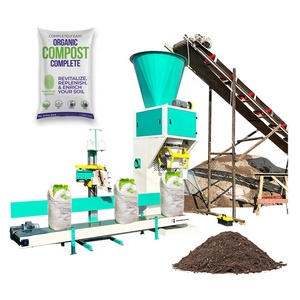
25kg 50kg Heavy Duty Bagging & Filling Machine

25kg 50kg Mulch Compost Irregular Shaped Pieces Bag Sealing Barite Gypsum Flakes Bagging Machine

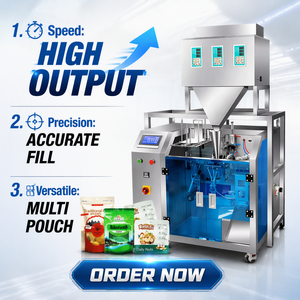
Doypack Multi-Function Pouch Packing Machine

Doypack Multi-Function Pouch Packing Food Rice Grain Coffee Beans Granule Automatic Bag Packaging Machine

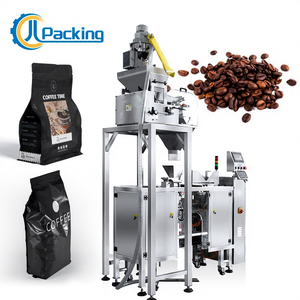
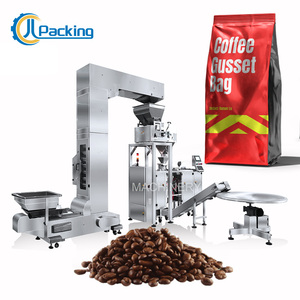
Coffee Beans Gusset Stand-up Bag Packaging Machine

Coffee Beans Gusset Stand-up Bag Pick Fill Seal Vertical VFFS Packaging Machine High-Accuracy Food Grade

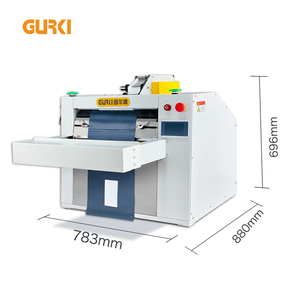
High Speed Automatic Tabletop Bagging Machine

GURKI High Speed Automatic Tabletop Bagging Machine With Wrapping & Gluing Functions For Food Pouch

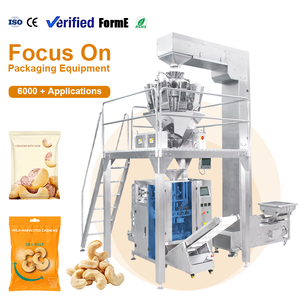
Food Grade Automatic Nuts Packing Machine

Food Grade Automatic Almonds Cashews Peanuts Packing Machine Back Seal Pillow Bag Gusseted Bag Packing Machine

Doypack Roasted Coffee Bean Automatic Packing Machine

Small Business Doypack Roasted Coffee Bean Gusset Bag Ziplock Pouch Automatic Packing Machine With Date Printer

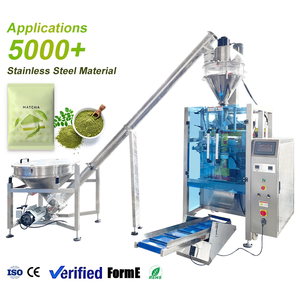
High Precision Vertical Powder Packing Machine

High Precision Automatic Vertical Gusset Bag Matcha Powder Walnut Powder Packing Machine

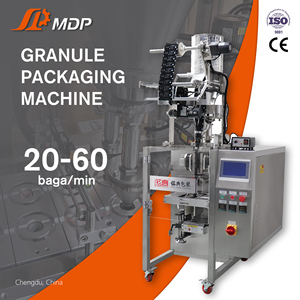
Multi-function Automatic Granule Packing Machine

Hot Sale Multi-function Automatic Vertical Granule Packing Machine Pouch Bag Coffee Tea Powder Packaging Machines

28+
Years Engineering Expertise
50+
Global Export Countries
±0.2%
Servo Dosing Precision
99.5%
OEE Machine Operational Yield

Executive Whitepaper: The Evolution of Industrial Jar Filling Automation

A Procurement & Engineering Benchmark for Global Bottling & Packaging Operations

Modern automated jar filling machinery sits at the intersection of precision fluid dynamics, mechanical robotics, and strict sanitary engineering. As global consumer demand surges across food processing, pharmaceuticals, cosmetics, and specialty chemicals, manufacturers are pressured to achieve higher Overall Equipment Effectiveness (OEE) while eliminating product giveaway and downtime. In rigid packaging applications—specifically involving glass jars, PET containers, HDPE wide-mouth tubs, and aluminum cans—achieving volumetric repeatability across variable fluid viscosities presents distinct engineering challenges.

As a leading Chinese manufacturer and global exporter of high-grade automatic packaging lines, our facility leverages nearly three decades of structural design innovation. We combine German pneumatic controls, Japanese servo-drive architectures, and robust 316L stainless steel contact parts to deliver filling lines that conform to international CE, ISO 9001, and ISO 14001 benchmarks.

Servo Piston Dosing

Ideal for high-viscosity pastes, honey, jams, peanut butter, and creams. Utilizes independent linear servo motors to control piston stroke length with precision accuracy under ±0.2%.

Auger Powder Filling

Engineered for fine powders, matcha, spices, and pharmaceutical compounds in jars. Integrated with dust-extraction shrouds and feedback weighers for dynamic tare compensation.

Peristaltic & Flow Meter

Non-contact liquid filling for sterile pharmaceutical reagents and essential oils. Zero cross-contamination, rapid fluid path replacement, and full CIP/SIP cleaning compatibility.

Engineering Insight: Liquid & Semi-Liquid Viscosity Dynamics

Filling Newtonian liquids (such as clear syrups or juices) requires linear laminar flow nozzles to eliminate aeration and foaming. Conversely, non-Newtonian shear-thinning liquids (such as mayonnaise, tomato paste, or heavy cosmetic gels) demand positive-cut shutoff nozzles paired with bottom-up diving fill mechanisms to prevent air pocket formation within wide-mouth glass jars.

Technical Benchmark: Rotary vs. Linear Automatic Jar Filling Lines

Selecting between linear and rotary jar filling machine configurations dictates facility footprint, capital investment, changeover flexibility, and line output speed (BPM - Bottles Per Minute). Below is an engineering comparison matrix designed for technical procurement managers:

Performance Specification Linear Multi-Head Filling Line Rotary Monoblock Filling & Capping System
Target Throughput Capacity 20 to 80 Jars per Minute (4–8 Heads) 100 to 300+ Jars per Minute (12–36 Heads)
Volumetric Accuracy Range ± 0.2% – ± 0.5% (Servo Driven) ± 0.15% – ± 0.3% (Flow Meter / Mass Meter)
Container Compatibility Glass Jars, PET Tubs, Cans (Wide Range) Dedicated Neck Diameters & Height Ratios
Format Changeover Time 15 to 25 Minutes (Tool-Less Adjustment) 45 to 90 Minutes (Starwheel & Change Parts)
Footprint & Installation Space Compact Modular Footprint (3.5m x 1.2m) Integrated Monoblock Footprint (5.0m x 2.2m)
Clean-In-Place (CIP) Capability Fully Automated Flushing Circuit Sterile Enclosure with HEPA Filtration & CIP/SIP

Industrial Trends: The Future of Container Filling Automation

How Smart Manufacturing & Sustainable Engineering are Redefining Industrial Packaging Lines

1. Industry 4.0 & Real-Time Telemetry

Modern bottling facilities demand deep machine connectivity. Advanced jar filling machinery now comes equipped with OPC-UA communication protocols, IoT sensor arrays, and cloud dashboard integration. Factory managers can remotely monitor real-time dosing variance, motor temperature profiles, compressed air consumption, and predictive maintenance schedules, minimizing unplanned downtime by up to 40%.

2. Zero-Loss Nitrogen Purging & Hygienic Sealing

To extend shelf life without chemical preservatives, current high-speed jar lines integrate vacuum nitrogen gas flushing immediately prior to induction foil sealing and capping. This process drops residual oxygen levels below 0.5%, preserving product color, flavor, and active bio-compounds in food pastes and nutritional supplements.

3. Sustainable Packaging & Lightweighting

The global shift toward eco-friendly packaging has resulted in thinner-walled glass containers and recycled PET (rPET) jars. Today's filling nozzles employ soft-landing servo positioning and gentle container handling starwheels that eliminate physical mechanical shock, preventing container cracking and stress fractures during high-speed clamping.

4. Rapid Tool-Less Format Changeover

With brand owners expanding SKU diversity, packaging lines must handle multiple jar volumes (e.g., 100ml to 1000ml) on a single machine. Next-generation linear fillers utilize digital position indicators, quick-release nozzle clamps, and recipe-driven HMI presets, dropping total line changeover time from hours to under 15 minutes.

Future Procurement Trends: Smart Sourcing Strategies for International Buyers

Mitigating Total Cost of Ownership (TCO) and Maximizing ROI in B2B Equipment Acquisition

When sourcing industrial jar filling machines from China, overseas procurement executives must evaluate criteria beyond initial capital expenditures (CAPEX). True economic value lies in minimizing long-term Operational Expenditures (OPEX), ensuring spare part availability, and verifying compliance with regional regulatory directives.

Key Factors Shaping Equipment Procurement:

  • Component Standardization: Top-tier Chinese original equipment manufacturers (OEMs) now build equipment utilizing standardized global component ecosystems. Incorporating Siemens PLC controllers, Schneider electrical breakers, Festo pneumatic actuators, Omron photoelectric sensors, and Delta servo systems ensures that maintenance teams can source replacement components locally anywhere in the world.
  • Turnkey System Integration: Overseas buyers increasingly prefer purchasing complete, integrated lines from a single manufacturer rather than combining piecemeal machinery. A cohesive line typically integrates: Container Unscrambling → Air Jet Cleaning → Automatic Filling → Foil Induction Sealing → Capping → Machine Vision Inspection → Automatic Labeling → Case Packing.
  • Sanitary Design & Certification: Procurement teams in North America and Western Europe require 3-A Sanitary Standards, EHEDG guidelines, and full CE marking. Contact parts must feature polished AISI 316L stainless steel with surface roughness Ra < 0.4 µm, featuring food-grade PTFE or Viton seals compatible with aggressive CIP cleaning chemical solutions.
Procurement Phase Strategic Evaluation Checklist Risk Mitigation Standard
1. Technical Specification Define product viscosity range, foaming characteristics, jar dimensions, and targeted BPM. Run physical material testing with factory sample batches prior to sign-off.
2. Factory Acceptance Test (FAT) Verify continuous 48-hour trial run, fill accuracy measurement, dry cycle speed, and emergency safety stops. High-definition live video inspection or third-party audit (SGS/TÜV certification).
3. Logistics & Export Packaging Ensure heavy-duty vacuum foil wrapping, anti-rust oil treatment, and fumigated seaworthy wooden crating. Container load inspection and maritime transit insurance coverage.
4. Commissioning & SAT Site Acceptance Testing, technician operator training, and local electrical standard compliance (e.g., 220V/380V/480V 50/60Hz). Comprehensive 2-year warranty with remote AR diagnostic support.

Enterprise Advantage: Why Partner With Us

Over 28 Years of Machinery Manufacturing Distinction & Global Export Reliability

Direct Factory Manufacturer Since 1996

Eliminate intermediary trading margins. We design, machine, assemble, and program all filling systems in our modern manufacturing facility, guaranteeing direct factory pricing and complete quality control over every structural frame component.

Strict CE & ISO Quality Standards

Our manufacturing protocols are certified under ISO 9001:2015 for quality management and ISO 14001:2015 for environmental standards. Every machine exported carries official European CE certification, backed by full electrical schematics and CE safety compliance validation.

Global Export Footprint (50+ Countries)

With thousands of active installations spanning North America, Europe, the Middle East, Southeast Asia, and Latin America, our engineering team possesses deep international logistics experience and localized voltage adaptation capabilities.

2-Year Warranty & On-Site Training

We stand firmly behind our engineering. All machines are supplied with an industry-leading 2-year warranty package. Certified field engineers are deployed globally for on-site machinery setup, line integration, and operator training.

Frequently Asked Questions (Procurement & Technical FAQ)

Addressing Common Engineering, Import, and Machine Selection Inquiries

What types of products can an automatic jar filling machine handle?

Our automatic jar filling machines are versatile industrial platforms designed to process liquid, semi-liquid, paste, powder, and granular materials. Typical applications include food items (honey, jam, peanut butter, sauce, spices, coffee powder), cosmetic formulations (body creams, gels, lotions), chemical reagents (solvents, oils, lubricants), and pharmaceutical powders or capsules into glass jars, PET containers, and wide-mouth plastic tubs.

How do you ensure dosing precision and prevent product drip?

Precision dosing is achieved through servo-driven pistons, mass flow meters, or high-accuracy auger screws controlled via PLC microprocessors. To eliminate nozzle dripping on jar rims, our nozzles feature pneumatic positive-cut shutoff valves, suck-back fluid control mechanisms, and servo-programmed bottom-up diving systems that lower nozzles into the container and ascend synchronously with the liquid rise level.

Can one filling line accommodate multiple jar sizes and shapes?

Yes. Our linear automatic filling machinery features modular width-adjustable conveyor guide rails, tool-less height adjustment handwheels with digital position counters, and expandable filling head configurations. Parameters for different jar volumes (e.g., 250ml, 500ml, 1000ml) are stored inside the touchscreen HMI recipe manager for instant recall.

What certifications and documentation accompany the machinery export?

All machinery exported carries full European CE marking, conforming to Machinery Directive 2006/42/EC and Low Voltage Directive 2014/35/EU. The manufacturing facility operates under ISO 9001:2015 and ISO 14001:2015 standards. Export documentation packages include complete Operation & Maintenance Manuals (in English), electrical and pneumatic schematics, spare parts catalog, FAT verification certificates, and 316L stainless steel material inspection reports.

What is the lead time for custom jar filling machine manufacturing?

Standard linear automatic filling systems have a typical manufacturing lead time of 25 to 35 business days following final engineering design sign-off and sample bottle receipt. Complex high-speed rotary monoblock lines or fully automated turnkey lines (incorporating unscramblers, cappers, and robotic palletizers) typically require 45 to 60 business days, followed by rigorous 48-hour factory testing.

How is after-sales technical support handled for overseas installations?

We provide comprehensive international after-sales service. All machines come equipped with remote Ethernet/Wi-Fi diagnostic modules, enabling our software engineers to troubleshoot PLC logic and assist your maintenance team in real-time. Additionally, our field engineers travel internationally to perform on-site installation, commissioning, and staff training. Replacement spare parts are stocked globally for rapid dispatch via DHL/FedEx Express.

Ready to Automate Your Jar Packaging Operations?

Consult with our senior packaging engineering team today. Get a customized line layout design, volumetric dosing calculation, and competitive factory quotation within 24 hours.

Contact Us