Executive Summary: The Evolution of 3-Side Seal Packaging Machines in China
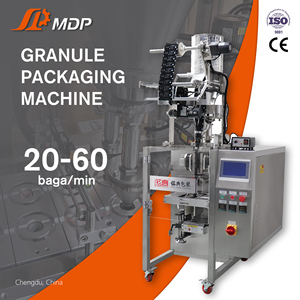
In the global B2B packaging landscape, the 3-side seal pouch remains one of the most cost-effective, versatile, and structurally sound flexible packaging formats for single-serve and multi-dose consumer goods. As modern FMCG, pharmaceutical, nutraceutical, and specialty chemical companies demand higher throughput, tighter seal integrity, and seamless integration with eco-friendly recyclable films, China's leading packaging machinery manufacturers have undertaken a massive technological transformation.
Transitioning from low-cost mechanical link designs to state-of-the-art multi-axis servo-driven systems, Chinese factories now offer industrial-grade 3-side seal machines equipped with smart PLC microcontrollers, digital thermal feedback control, and modular dosing units (auger, volumetric cup, liquid piston, and multi-head weighers). This procurement whitepaper analyzes the key engineering standards, mechanical architectures, global buying trends, and supplier audit criteria necessary to source world-class packaging machinery directly from China's top OEMs.
Core Buyer Insight: A standard 3-side seal machine forms a pouch by folding the web film along one edge and heat-sealing the remaining three sides. Evaluating a Chinese manufacturer requires analyzing seal bar temperature uniformity (tolerances within ±1°C), film tensioning dynamics, and the integration of international brand components (e.g., Siemens PLC, Schneider Electrics, Festo Pneumatics, and Omron PID controllers).
Mechanical Architecture & Sealing Dynamics of 3-Side Seal Machines
Understanding the kinematic principles of a 3-side seal Vertical Form Fill Seal (VFFS) or Horizontal Form Fill Seal (HFFS) machine is essential for procurement managers. Unlike 4-side seal sachets which require two separate film webs or complete edge sealing on four borders, a 3-side seal machine folds a single continuous web film around a forming shoulder or vertical tracking beam. This creates a natural fold along one longitudinal edge, requiring heat sealing on only the bottom, vertical side, and top edges.
The primary advantage of the 3-side seal geometry is maxed-out internal pouch volume relative to film surface area, alongside reduced film consumption compared to 4-side sealed formats. However, achieving airtight, leak-proof hermetic seals on high-speed automatic production lines requires precise synchronization across four distinct mechanical sub-systems:
- Unwind & Web Tracking Assembly: Utilizes optical photocell sensors (mark sensors) and servo-driven tension rollers to maintain web alignment within fractional millimeter tolerances, preventing film drift during high-speed feeding.
- Forming Tube & Fold Collar: Precision CNC-machined stainless steel shoulders that fold flat multi-layer laminates (e.g., PET/AL/PE, NY/PE, Paper/PE) without creasing or stretching the material substrate.
- Longitudinal & Transverse Heat Sealing Jaws: Pneumatic or servo-actuated heating bars embedded with cartridge heaters and RTD sensors. Premium machines feature constant heating or impulse sealing technologies calibrated for specific film melting points.
- Dosing & Product Injection Interface: Synchronized filling mechanisms (auger screws for fine powders, liquid piston pumps for viscous sauces/gels, or multi-head combination weighers for irregular solids) that inject product precisely during the bottom-seal dwell time to avoid seal area contamination.
Comprehensive Architectural Comparison: 3-Side Seal vs. 4-Side Seal vs. Pillow Bag
When selecting a flexible packaging format for your product line, evaluating structural tradeoffs directly impacts raw film costs, shelf aesthetics, and packaging machine CAPEX. The data visualization matrix below outlines key technical metrics for industrial decision-making:
| Performance Parameter | 3-Side Seal Pouch | 4-Side Seal Sachet | Back-Seal Pillow Bag |
|---|---|---|---|
| Film Efficiency | Maximum (1 fold saves 1 seal area material) | Moderate (Seals along all 4 perimeter edges) | High (Overlap longitudinal seam) |
| Hermetic Seal Reliability | Very High (Optimal for vacuum/gas flushing) | High (Uniform edge compression) | Moderate to High (Fin/Lap seal dependent) |
| Max Linear Speed (Single Lane) | 40 – 90 Packs/Min | 50 – 120 Packs/Min | 60 – 160 Packs/Min |
| Internal Bag Volume Ratio | Highest (~88% usable space) | Moderate (~75% usable space) | High (~82% usable space) |
| Target Dosing Applications | Powders, Liquids, Gels, Granules, Coffee | Pharma powders, Condiments, Sample packs | Bulk Snacks, Grains, Chips, Hardware |
| Tooling Changeover Time | 15 – 30 Minutes | 20 – 40 Minutes | 10 – 20 Minutes |
Top 4 Industrial Trends Shaping the Future of Packaging Procurement (2026–2030)
As global supply chains shift toward digital automation and decarbonization, top Chinese packaging machine factories are innovating across several key technological vectors. Forward-thinking procurement teams should factor these industry trends into their equipment specification requirements:
1. Eco-Friendly Mono-Material Film Sealing
Traditional multi-layer laminates containing non-recyclable aluminum foil are being replaced by mono-PE, mono-PP, and biodegradable PLA barrier films. Modern 3-side seal machines incorporate ultrasonic sealing and ultra-precise PID temperature controls to eliminate film burn-through on narrow sealing temperature windows.
2. Full Servo Architecture & Smart Motion PLC
Replacing mechanical cams with independent servo motors (e.g., Schneider or Siemens Servo drives) allows digital adjustment of pouch length, seal dwell time, and speed directly via HMI touchscreens, eliminating manual mechanical gear adjustments during product batch changeovers.
3. IoT Diagnostics & Predictive Maintenance
Industry 4.0 integration enables real-time monitoring of thermal profiles, pneumatic pressure drops, and cycle speeds. Remote cloud gateways allow factory engineers to perform software updates and diagnose sensor faults globally without delay.
4. Hygienic Sanitary Design (cGMP Compliance)
Stainless steel SUS304/SUS316L construction with quick-release washdown components, IP65 waterproof enclosures, and clean-in-place (CIP) liquid pumps are becoming standard for pharmaceutical and food-grade packaging lines exported worldwide.
5. Modular Multi-Lane Scalability
High-volume manufacturing plants are transitioning from single-lane units to multi-lane 3-side seal stick/sachet machines (up to 12 lanes), boosting output to 400+ packs per minute while reducing labor costs and floor space requirements.
6. Integrated Quality Inspection Systems
Line integration with automatic checkweighers, inline thermal date coders, optical character verification (OCV), and vision inspection systems automatically rejects underfilled pouches or defective seals without stopping main production.
Factory Selection & OEM Quality Audit Framework for Overseas Buyers
Sourcing automated machinery from China requires a stringent auditing protocol to ensure build quality, long-term durability, and international electrical compliance. Below is the 4-tier verification protocol executed by experienced global procurement professionals:
1. Structural Frame & Contact Material Verification
Cheaper machines often utilize thin mild steel painted with enamel coatings, which corrode in wet or chemical processing environments. Insist on SUS304 stainless steel machine framing (minimum 2.5mm plate thickness) and SUS316L mirror-polished steel for all product-contact parts (dosing hoppers, liquid tubes, auger screws) to meet FDA and CE guidelines.
2. Standardized Electrical & Pneumatic Component Audit
A major vulnerability when importing overseas machinery is proprietary, unbranded electrical controls that cannot be replaced locally when components wear down. Leading Chinese packaging machine manufacturers build standard panels using universally accessible global brands:
- PLC Microcontrollers: Siemens (S7-1200/1500), Schneider Electric, or Mitsubishi Electric.
- Pneumatic Cylinder Actuators & Solenoid Valves: Festo (Germany) or SMC (Japan).
- Temperature Control Modules: Omron PID controllers with Solid State Relays (SSR).
- Low-Voltage Electrics & Switches: Schneider Electric or ABB.
- Photoelectric Eye & Mark Sensors: Sick (Germany) or Banner (USA).
3. Pre-Shipment Factory Acceptance Testing (FAT) Protocol
Never approve final shipment without a documented Factory Acceptance Test. Request a live video stream or third-party inspection (SGS/TÜV) verifying the machine operating continuously for at least 4 to 8 hours using your specific product film and bulk material sample. Critical FAT checkpoints include:
- Weight Accuracy & Standard Deviation: Verify 100 consecutive pouches on a calibrated digital scale to ensure dosing accuracy within target tolerances (±0.5% to ±1%).
- Leakage & Dye Penetration Test: Submerge sealed liquid/powder pouches in a vacuum chamber dye bath to confirm zero micro-channel leaks along heat seal seams.
- Thermal Stability Monitoring: Ensure seal bar heat remains stable within ±1°C during continuous high-speed runs.
- Emergency Stop & Safety Door Interlocks: Confirm machine motion halts instantaneously when safety shields are opened or emergency buttons are engaged.
Total Cost of Ownership (TCO) & Procurement ROI Analysis
Evaluating a 3-side seal machine purchase goes beyond initial machine purchase price (CAPEX). A comprehensive Total Cost of Ownership model evaluates operational efficiency, utility consumption, wear-and-tear replacement costs, and labor savings across a 5-to-10-year equipment lifecycle:
TCO Formula: TCO = Initial Machine Price + Custom Tooling Costs + Freight/Import Duties + (Annual Energy & Compressed Air Costs × Years) + (Spare Parts Wear × Years) - (Labor Savings × Years)
By automating manual bagging with a high-speed 3-side seal machine operating at 60 packs per minute, a food processing line operating one 8-hour shift per day produces 28,800 finished pouches daily. Compared to semi-automatic pedal filling (approx. 10-15 packs/min per operator), an automated line typically amortizes its initial capital investment within 6 to 9 months of active operation.