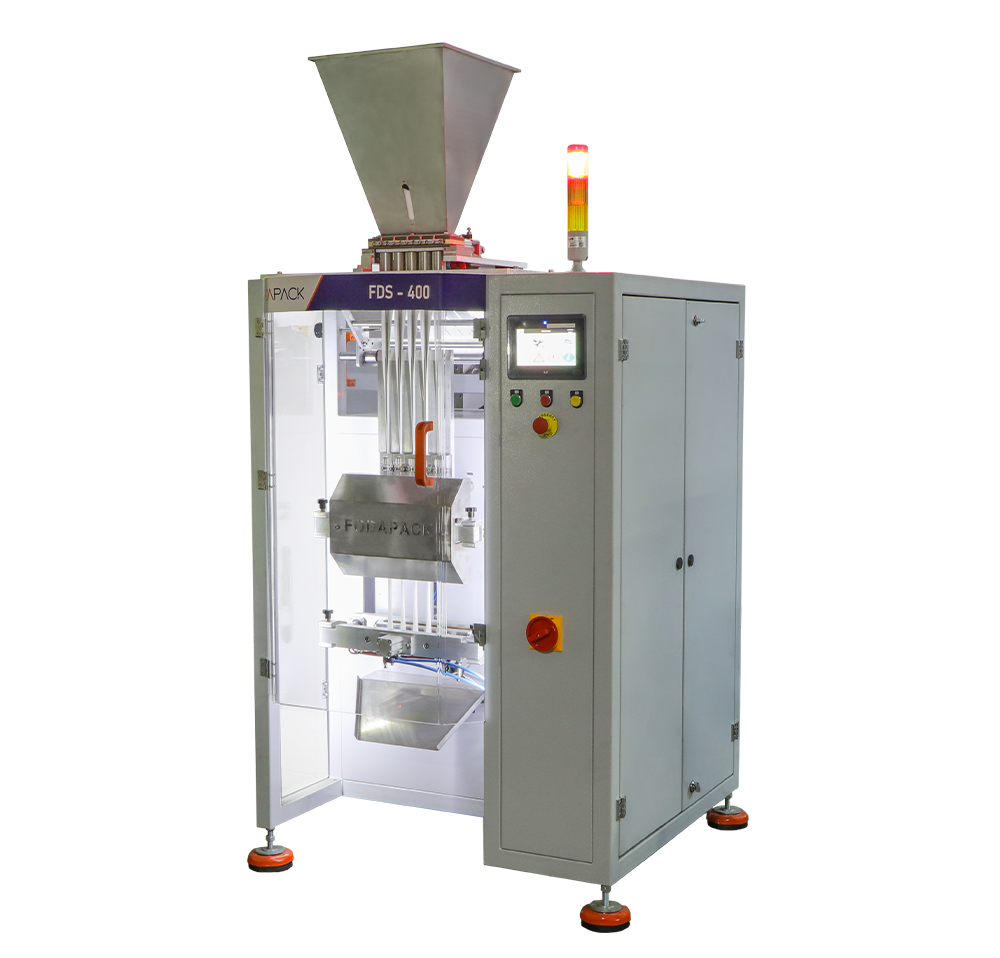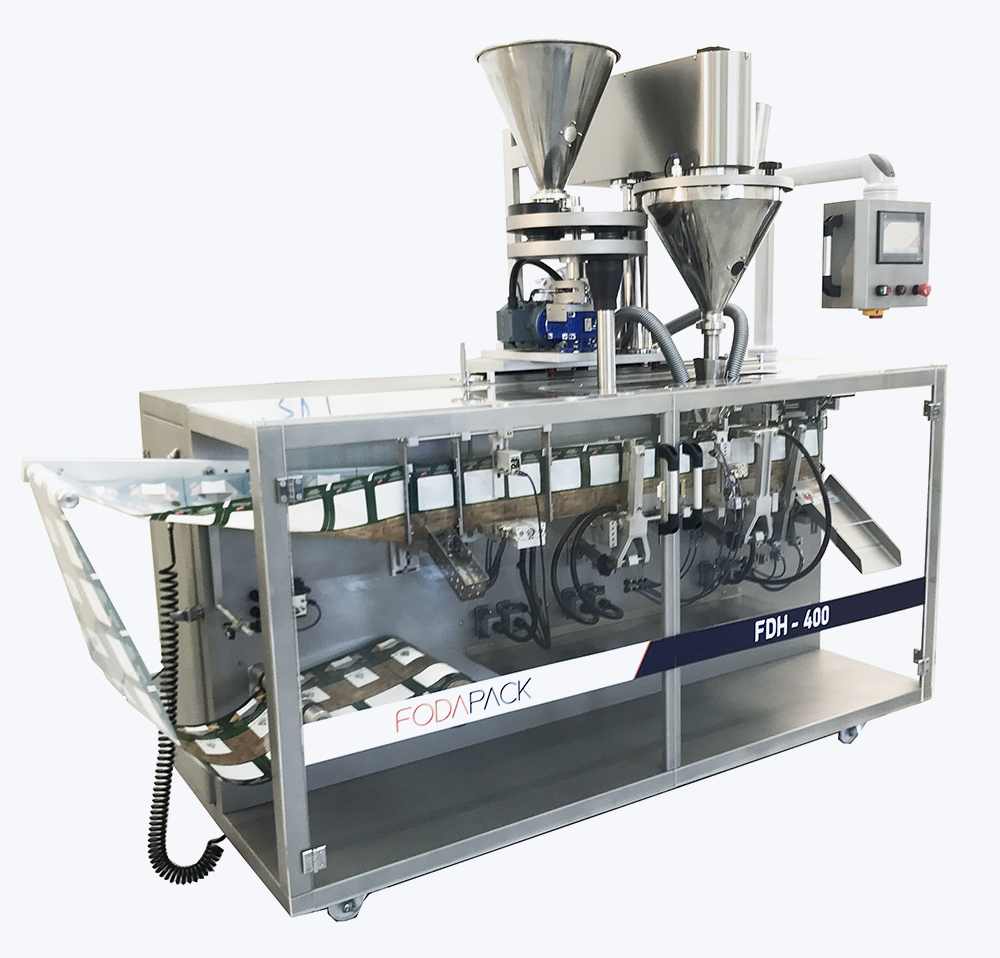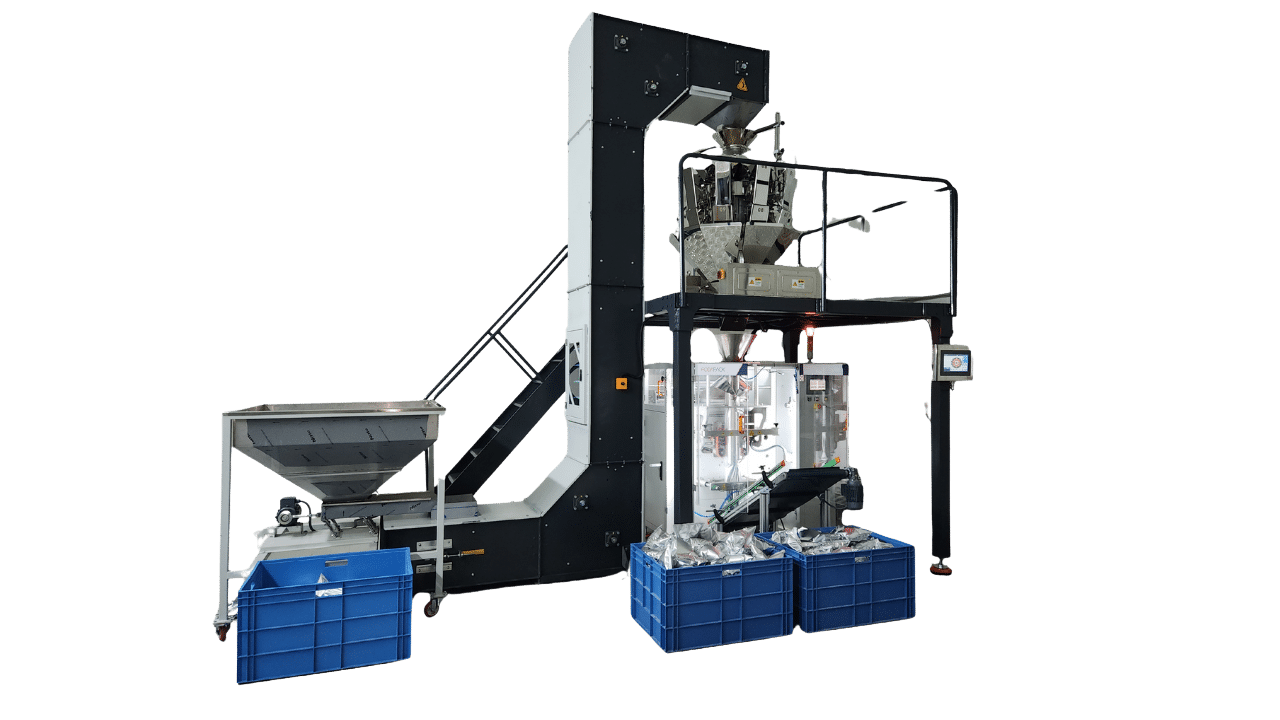
A Granule Stick Pack Machine is designed to measure, form, fill, and seal small portions of free-flowing granules. It commonly handles products such as sugar, salt, spices, seeds, instant drink powders with coarse particles, and selected agricultural materials. The machine creates narrow, lightweight sachets from a continuous film roll.
It works through several coordinated stages. A dosing system measures each portion. A forming collar shapes the film into a tube. Vertical and horizontal sealing jaws close the package. A cutting unit then separates each stick pack. The result should be clean, consistent, and easy to open.
Walter Soroka, a respected packaging author, defines packaging as “the science, art, and technology of enclosing and protecting products for distribution, storage, sale, and use.” His words explain why machine selection involves more than speed. Product flow, particle size, moisture, sealing temperature, and film structure all matter.
Small details matter.
A fragile granule may break inside the auger. A sticky product may interrupt dosing. A weak seal can ruin an otherwise accurate package. These problems are easy to underestimate during early planning. I have seen specifications focus heavily on output while ignoring cleaning access and changeover time. That approach can create avoidable production pressure.
A reliable Granule Stick Pack Machine should offer stable dosing, adjustable filling ranges, hygienic contact parts, and clear operator controls. It should also support practical testing with the real product and packaging film. No machine performs perfectly with every granule. Careful trials remain essential.
What Is a Granule Stick Pack Machine?
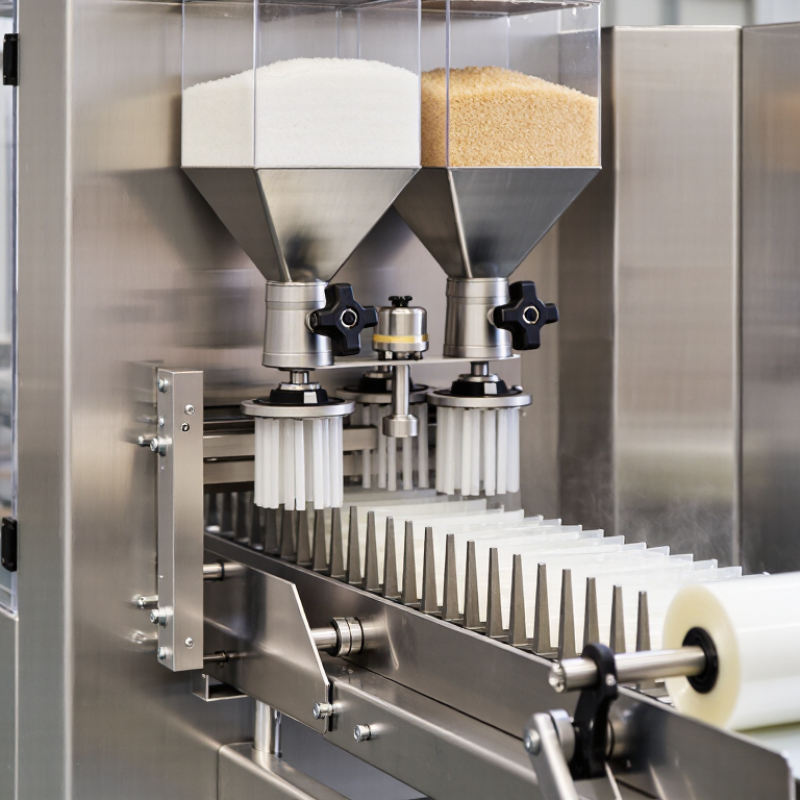
A granule stick pack machine forms, fills, and seals narrow single-serve pouches. It handles materials such as sugar, salt, instant coffee, seeds, and dry supplement powders with larger particles. Unlike liquid packaging equipment, it uses a dosing system designed for free-flowing granules. The process usually begins with a roll of laminated film. The machine shapes the film into a tube, measures each portion, and seals the package vertically and horizontally.
Accuracy depends on the material, not only the machine. Granules may bridge, absorb moisture, or flow unevenly. A multi-cup volumetric filler can work well for consistent particles. An auger or servo-controlled system may provide better control for variable products. Operators should check fill weight, seal strength, film alignment, and cutting accuracy during production. Small changes in humidity can affect performance. That detail is easy to overlook.
A reliable setup includes food-contact-compatible parts, guarded moving components, and accessible cleaning areas. Product trials are essential because laboratory results may not match a busy production floor. Technicians often adjust vibration, dosing time, sealing temperature, and film tension. There is no perfect setting for every granule. A practical machine should allow these adjustments without excessive downtime. Records of rejected packs and weight checks also help identify recurring problems. The process looks simple, but consistency requires attention.
A granule stick pack machine forms narrow sachets, measures free-flowing products, fills each pack, seals it, and cuts it into individual sticks. The chart shows representative fill weights commonly used for different granular products; actual specifications vary by product density, formulation, and packaging requirements.
Representative fill-weight examples: instant coffee 1.8 g, table salt 1 g, ground spices 2 g, sugar 5 g, and seeds 10 g per stick pack.
What Is a Granule Stick Pack Machine?
How a Granule Stick Pack Machine Works
A granule stick pack machine forms narrow, single-dose sachets from a continuous film roll. It measures dry granules, shapes the film, fills each pack, seals it, and cuts it. The process begins when a driven roller pulls film through the forming section. A forming collar folds the flat film into a slim tube. Vertical sealing creates the back seam. Horizontal jaws then close each pack above and below the product.
The dosing system controls how much material enters each tube. Depending on the granule size, it may use a volumetric cup, auger, or controlled gate. A sensor checks the film position before each sealing cycle. This matters because even a small tracking error can create weak seals or uneven pack lengths. Operators usually inspect seal width, fill weight, cut position, and rejected packs during production. Clean contact surfaces also reduce dust buildup around the sealing jaws.
Granules do not always flow perfectly. Humidity, particle shape, and static electricity can cause bridging or inconsistent feeding. That is where practical adjustment matters. Changing vibration, dosing speed, or sealing temperature may improve stability, but excessive adjustment can create new errors. A reliable machine still needs calibration, routine cleaning, and realistic production checks. No setting works equally well for every material. The best results come from matching the feeder, film, and sealing conditions to the specific granule.
What Is a Granule Stick Pack Machine?
Key Components of a Granule Stick Pack Machine
A granule stick pack machine fills measured dry products into narrow, sealed sachets. Typical products include sugar, salt, seeds, and instant drink powders. The process depends on several coordinated components. Each part affects accuracy, hygiene, and production speed.
The product hopper stores granules before dosing begins. An auger, cup, or weighing system controls the fill quantity. Free-flowing granules may suit volumetric cups, while irregular particles often need weighing control. The forming collar shapes packaging film around the product tube. Film sensors help maintain alignment and reduce waste. Small errors matter here.
Vertical sealing jaws create the longitudinal seal. Horizontal jaws close each individual stick pack and create the cutting point. Temperature, pressure, and sealing time require careful adjustment. Excessive heat can damage the film. Insufficient heat may cause leaking packs. Operators should inspect seal strength during production, not only afterward.
A programmable control system coordinates filling, sealing, cutting, and film movement. Photoelectric sensors detect registration marks and help maintain pack length. A discharge conveyor moves finished packs toward collection or inspection. In practical settings, dust buildup can affect sensors and seals. Regular cleaning is essential, although cleaning routines are sometimes treated as optional. That is a mistake. Equipment checks, test weights, and documented adjustments support reliable results and help operators identify problems before they become costly.
| Component or Data Dimension | Primary Function | Typical Technical Information | Important Design Considerations |
|---|---|---|---|
| Product Hopper | Stores granules and supplies them to the dosing system. | Commonly fabricated from food-grade stainless steel; capacity varies according to product and machine layout. | The hopper should reduce bridging, segregation, dust accumulation, and uncontrolled product flow. |
| Agitator or Hopper Vibrator | Maintains a more consistent flow of granules into the dosing mechanism. | May use mechanical agitation or controlled vibration, depending on the flow behavior of the product. | Excessive vibration can cause segregation, particle damage, or inaccurate filling. |
| Granule Dosing System | Measures a predetermined quantity of granules for each stick pack. | Common technologies include volumetric cup dosing, auger dosing for suitable powders or fine granules, and weigh-based dosing for higher accuracy. | The correct system depends on particle size, bulk density, flowability, moisture, and target fill weight. |
| Film-Feeding Unit | Unwinds and guides the packaging film toward the forming area. | May include a film roll holder, tension control, guide rollers, and registration control. | Stable film tension helps maintain consistent pack length and prevents wrinkles or tracking errors. |
| Film Registration Sensor | Detects printed registration marks to align graphics and cut positions. | Typically uses an optical sensor when the film contains repeat-print marks. | Sensor setup must match the contrast, color, speed, and print repeat of the packaging film. |
| Forming Collar and Forming Tube | Shapes flat film into a narrow tubular package around the product path. | The forming set is selected according to stick width, film structure, and product drop path. | Correct alignment helps prevent film creasing, product spillage, and uneven seals. |
| Longitudinal Sealing Unit | Creates the continuous seal along the length of the stick pack. | Usually uses heated sealing surfaces or a compatible continuous sealing method. | Seal temperature, pressure, dwell time, and film compatibility must be controlled together. |
| Transverse Sealing Jaws | Forms the top and bottom seals between individual stick packs. | Jaw configuration and sealing profile depend on the number of lanes and required pack format. | Consistent jaw pressure and temperature are essential for leak-resistant seals. |
| Cutting Mechanism | Separates the continuously formed web into individual stick packs. | May use straight cutting, serrated cutting, or tear-notch tooling, depending on pack requirements. | Cut timing must be synchronized with film registration and sealing cycles. |
| Drive and Motion System | Coordinates film movement, dosing, sealing, and cutting operations. | Commonly includes servo motors, gearboxes, belts, rollers, and position feedback devices. | Accurate synchronization improves pack length, reduces film waste, and supports repeatable output. |
| Control System and HMI | Allows operators to set, monitor, and adjust machine parameters. | Typical settings include pack length, sealing temperature, dosing timing, speed, alarms, and recipes. | A clear interface and password-controlled access can improve operating consistency and safety. |
| Sensors and Inspection Devices | Monitor film position, product presence, temperature, doors, and machine conditions. | May include photoelectric sensors, temperature sensors, door switches, and optional checkweighing equipment. | Detection points should support safe stoppage and help identify missing product, open seals, or film faults. |
| Typical Pack Format | Defines the physical size and presentation of each finished stick pack. | A stick pack is generally a narrow, elongated sachet with longitudinal and transverse seals. | Pack dimensions must match the product dose, film width, forming set, and intended use. |
| Packaging Film Requirements | Provides the barrier, sealability, print surface, and mechanical strength of the pack. | Film selection depends on product sensitivity, required barrier properties, sealant layer, thickness, and machinability. | Film must be compatible with the sealing temperature range and the selected forming and cutting process. |
| Quality and Performance Checks | Verify that every pack meets filling, sealing, appearance, and dimensional requirements. | Typical checks include fill-weight variation, seal integrity, leak testing, pack length, cut accuracy, and visual defects. | Testing frequency should reflect the product risk, applicable regulations, packaging material, and production control plan. |
Note: Technical values and configurations vary according to the granule characteristics, target dose, packaging film, number of lanes, and required production speed.
What Is a Granule Stick Pack Machine?
A granule stick pack machine forms narrow sachets and fills them with measured granular products. It commonly handles sugar, salt, instant coffee, seasoning, seeds, and other free-flowing materials. These products move through a hopper and dosing system before heat sealing creates compact, portable packs.
Granule suitability depends on particle size, moisture, density, and flow behavior. Uniform crystals usually dose smoothly and produce stable fill weights. Sticky or uneven granules may bridge inside the hopper, causing pauses or inconsistent portions. In production trials, operators often test several speeds before choosing a reliable setting. A product may appear free-flowing but still behave differently after storage. That detail is easy to miss.
Tips: Check granule flow before selecting equipment. Measure bulk density, screen oversized particles, and control humidity near the filling area. Keep the hopper clean, especially after flavored or oily products. Inspect seals regularly. Small particles can remain between sealing surfaces and weaken the package. No machine removes every variation, so routine weight checks remain important. Calibration should reflect the actual product, not only laboratory samples.
A granule stick pack machine forms narrow sachets and fills them with measured dry products. Typical materials include sugar, salt, tea, seeds, and nutritional granules. The machine usually combines film unwinding, dosing, sealing, cutting, and date coding in one line.
Start with the granule characteristics. Particle size, density, moisture, and flowability affect filling accuracy. A test with your actual material is essential. Some granules bridge inside the hopper or create uneven doses. That small issue can become expensive waste. Check whether the dosing system supports your target weight and production range. Servo-driven control may improve repeatability, but it can also increase maintenance demands.
Speed deserves careful attention. A higher rated output may look attractive, yet unstable feeding can reduce real production. Ask for verified output under comparable conditions. Film compatibility also matters. Poor heat control can cause weak seals, wrinkles, or product trapped in the seal. Operators should have clear access to change parts and cleaning areas. Tool-free adjustments can reduce downtime.
Hygiene and safety require practical review. Choose contact materials suitable for the product and a design with limited dust accumulation. Confirm guarding, emergency stops, electrical protection, and documented operating procedures. Control software should record key settings without becoming difficult to use. After-sales training, spare-part access, and response time are often overlooked. They should not be. A factory trial may reveal problems that brochures never mention.
It forms, fills, and seals narrow single-serve pouches. The machine uses laminated film and measured dry granules. It commonly handles sugar, salt, seeds, and instant drink powders.
A film roll enters the machine first. The film forms a tube around the product path. A dosing system measures each portion. Vertical and horizontal seals close the pouch.
A volumetric cup system suits consistent, free-flowing particles. Irregular granules may need weighing control. An auger or servo-controlled system can improve adjustment. The product matters as much as the machine.
Humidity can change how granules flow. Some particles bridge inside the hopper. Others absorb moisture or move unevenly. Operators should check fill weights during production.
The hopper stores product before dosing. The forming collar shapes the film tube. Sealing jaws close and separate each pouch. Sensors help control film alignment and pack length.
They should adjust temperature, pressure, and sealing time. Too much heat may damage the film. Too little heat can create leaks. Inspect seals during production, not only afterward.
Laboratory results may differ from factory-floor performance. A busy line creates vibration, dust, and changing temperatures. Trials help adjust dosing time, vibration, film tension, and sealing heat. One setting rarely fits every granule.
Clean dust from sensors, seals, and accessible machine areas. Use food-contact-compatible parts where required. Keep moving components properly guarded. Record rejected packs and weight checks. Cleaning may seem minor. It is not.
A Granule Stick Pack Machine is an automated packaging system designed to measure, fill, and seal granular products in narrow, single-use stick packs. It typically operates by feeding granules into a controlled dosing system, forming packaging film into tubular pouches, filling each pouch with a precise quantity, and sealing and cutting the finished packs. This process supports efficient production, consistent portion control, and convenient storage and transport.
Key components may include a material hopper, dosing mechanism, film-forming unit, sealing jaws, cutting system, and control panel. Suitable products can include sugar, salt, coffee granules, powdered drink mixes with granular textures, seeds, and other free-flowing food or household materials. When choosing a Granule Stick Pack Machine, important factors include product characteristics, filling accuracy, production speed, pack size, film compatibility, cleaning requirements, operating simplicity, and overall maintenance needs.