Choosing the 2026 best Powder Stick Pack Machine requires more than comparing prices, speeds, or attractive specifications. Global buyers need equipment that handles real production pressure. Powder flow can change with humidity, particle size, density, and temperature. A machine that performs well in a showroom may behave differently beside a dusty factory window.
Packaging engineer Dr. Peter J. Anderson explains, “Precision begins with understanding the powder, not merely programming the machine.” This principle deserves attention. The right system should match the product’s flow characteristics, target weight, sachet dimensions, sealing material, and expected output. It should also provide practical cleaning access, stable dosing, clear controls, and responsive technical support.
Speed matters. Consistency matters more.
A reliable Powder Stick Pack Machine should produce neat, sealed sticks with limited product waste. Buyers should examine auger or volumetric dosing performance, servo control, film compatibility, and changeover time. They should also request production samples using their actual powder. Brochures cannot reveal every problem.
The best choice is rarely the most expensive machine. It is the machine that remains predictable after weeks of operation. That sounds obvious. It is not.
This guide compares key machine features, supplier capabilities, maintenance expectations, and purchasing risks for international buyers in 2026. It also considers operator training, spare-parts availability, documentation, and factory acceptance testing. Some recommendations may seem less glamorous than maximum speed. That is intentional. A smaller, stable machine may outperform a faster system that requires constant adjustment.
Perfect selection is impossible. Careful selection is achievable.
2026 Best Powder Stick Pack Machine for Global Buyers
What Is a Powder Stick Pack Machine?
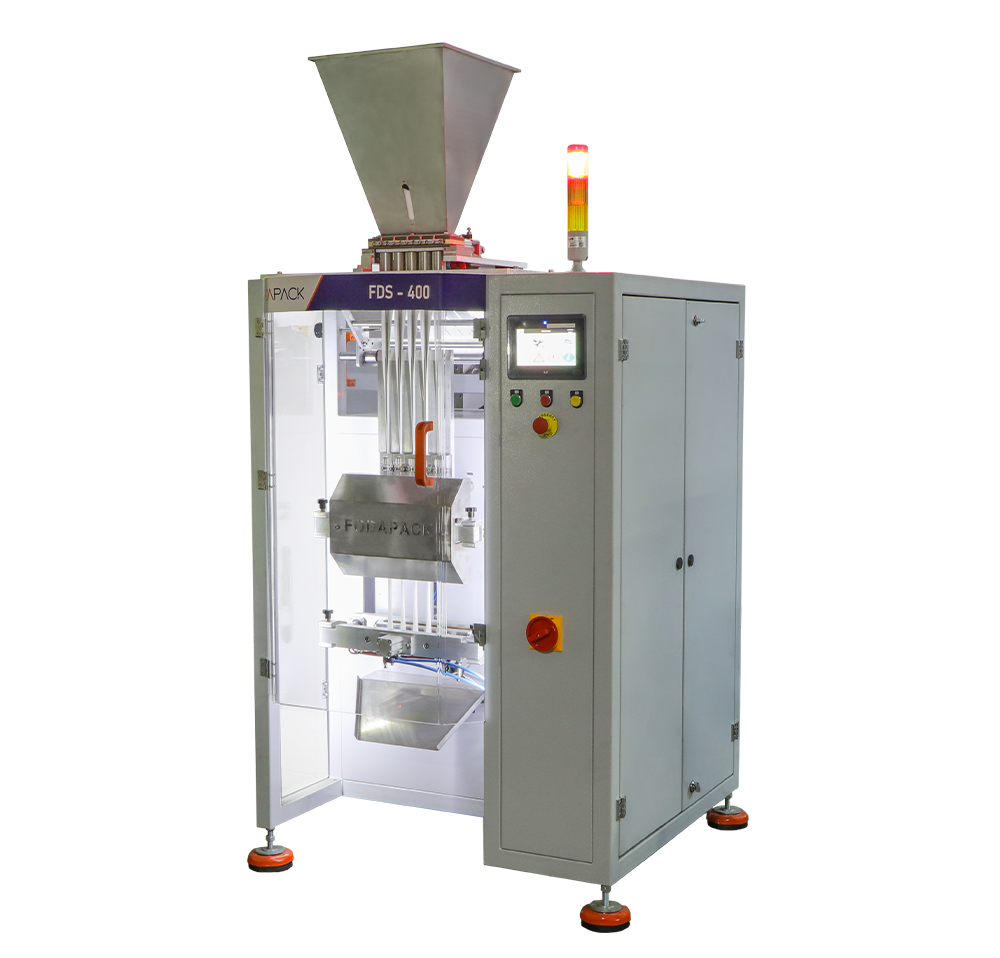
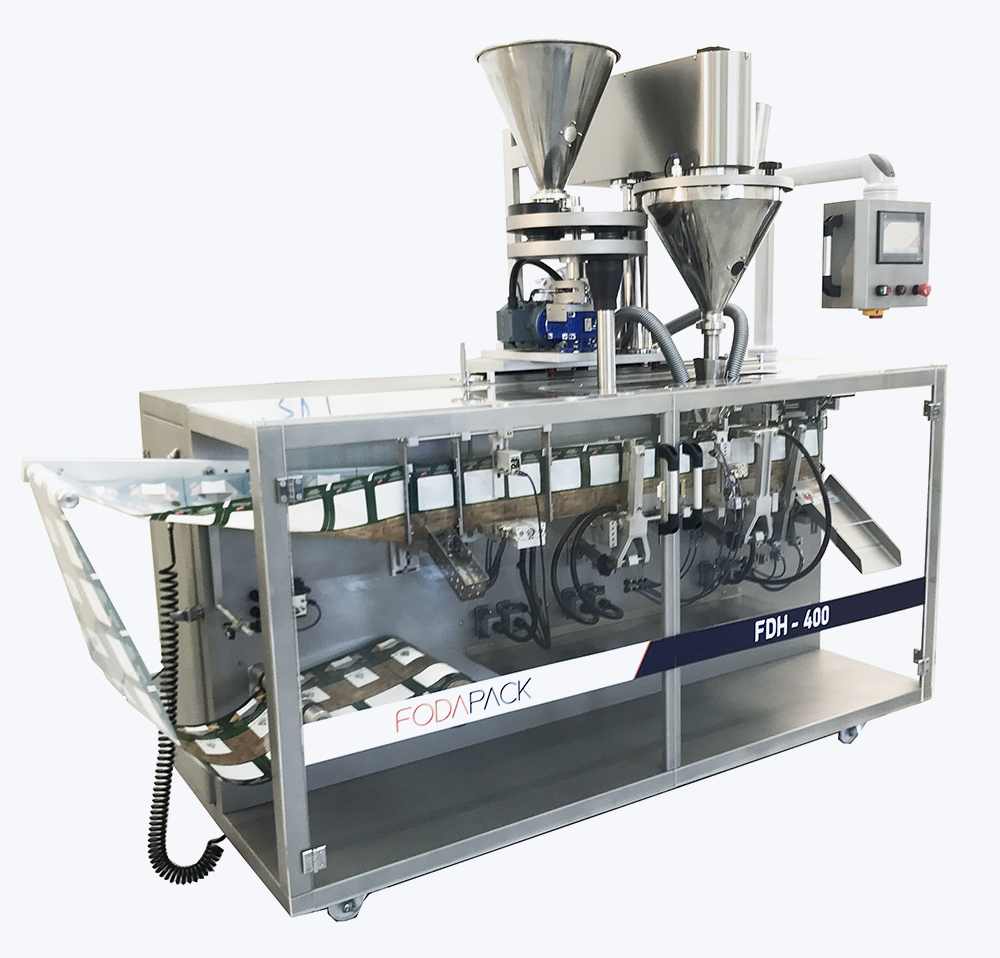
A powder stick pack machine forms narrow sachets from a continuous roll of film. It measures powder, fills each tube, seals the edges, and cuts finished sticks. The process happens in seconds. A typical system may produce 30 to 120 sticks per minute, depending on powder flow, sachet size, and filling accuracy.
Most machines use an auger filler for controlled dosing. Sensors check film position, temperature, and sealing pressure. Some models add servo motors, dust extraction, and automatic weight correction. These details matter when handling fine ingredients that bridge, settle, or cling to metal surfaces. A practical factory test should use the buyer’s actual powder, not a similar sample.
Industry data supports this format’s growth. Smithers’ Future of Global Flexible Packaging to 2029 estimates continued expansion in flexible packaging, driven by lightweight single-use formats and efficient material use. PMMI market intelligence also links packaging automation with labor efficiency and improved production consistency. However, reports can hide operational limits. A high-speed specification may describe ideal conditions, not sticky powder on a humid morning.
For global buyers, evaluate auger accuracy, film compatibility, cleaning access, electrical standards, and spare-part support. Ask for measured results, including average weight deviation and seal strength. A shiny machine is not automatically a reliable machine. That is where careful testing matters.
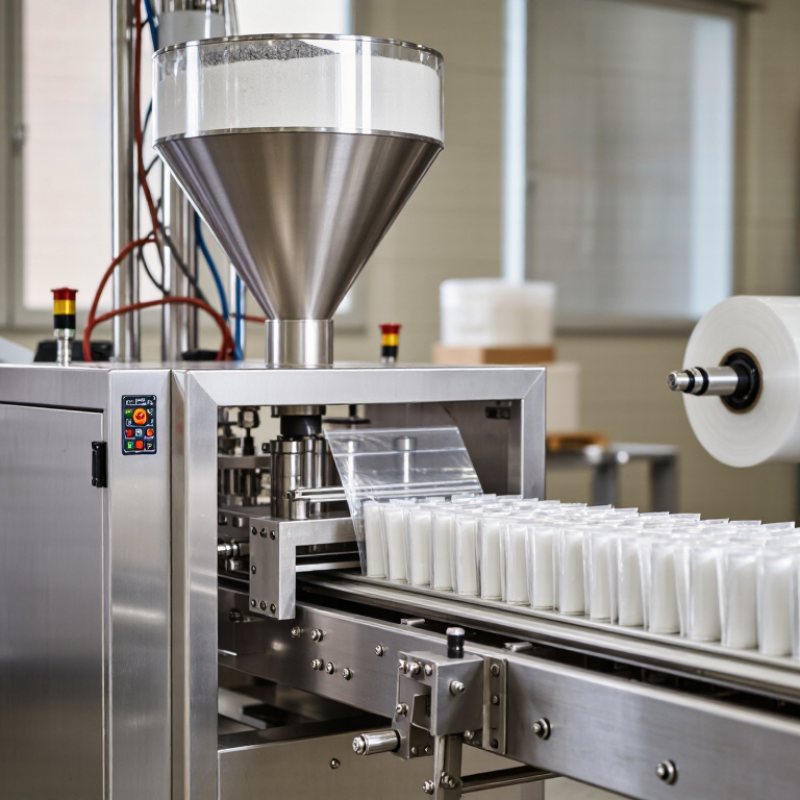
A powder stick pack machine converts loose powder into narrow, sealed sachets through a controlled sequence. The process begins with a hopper, where an agitator helps reduce bridging and uneven flow. An auger or volumetric cup measures each portion before it enters the forming tube. Weight-based systems can improve accuracy when powder density changes during production.
The packaging film travels from a roll and passes through forming collars. These guides shape the flat film around the filled tube. Vertical and horizontal sealing jaws then apply controlled heat and pressure. A knife cuts individual sticks after the seals cool slightly. The cycle is fast. Small errors matter.
In factory trials, operators should check powder flow, auger speed, film tension, and seal temperature together. A minor adjustment in one area can affect the others.
Sensors monitor film registration, product presence, and sealing position. A programmable controller coordinates these signals and can stop production after a detected fault. Dust extraction also protects the sealing area from contamination.
In practice, this process is rarely perfect. Humidity may cause clumping, while lightweight powder can create dust during filling. Regular calibration, sample weighing, and seal-strength testing provide more dependable results. Buyers should request trials using their actual powder, because laboratory performance may not reflect daily factory conditions. That step often reveals practical issues before installation.
The best powder stick pack machines in 2026 combine accurate dosing, stable sealing, and simple operation. An auger filler should handle fine powders without creating large weight variations. Servo-driven systems improve control during rapid production. Dust extraction also matters, especially when powder settles around sealing jaws and sensors.
Reliable machines include touchscreen controls, recipe storage, and clear alarm messages. Operators can adjust fill weight without complicated manual calculations. Fast changeover supports different sachet lengths and powder types. However, no machine performs perfectly with every powder. Humidity, density, and particle size can still affect accuracy.
Tips: Test your actual powder before purchase. Check ten consecutive sachets, not only one sample. Ask for cleaning access, spare-part availability, and training support. Confirm electrical standards, language options, and local service coverage before shipment.
Food-grade contact parts should be easy to inspect and clean. Stainless steel construction helps resist corrosion and supports hygienic production. A strong sealing system should maintain consistent temperature during long shifts. Safety guards, emergency stops, and overload protection reduce workplace risks. Documentation should include operating procedures, maintenance intervals, and test records. Buyers should also review energy use and compressed-air needs. A lower purchase price may become expensive when downtime, waste, and difficult maintenance are included.
For global buyers, comparing powder stick pack machine suppliers requires more than checking speed and price. Powder flow varies with density, humidity, and particle size. Ask suppliers to test your actual product, not a similar sample. Record fill-weight results, film waste, sealing strength, and changeover time. A machine claiming 120 packs per minute may perform differently in your factory.
Demand documented evidence. FAT videos, calibration records, electrical drawings, and spare-parts lists reveal supplier maturity. The World Bank’s 2023 Logistics Performance Index covers 139 economies, showing why local technical support and shipping reliability matter.
Also compare energy consumption per 1,000 packs. The International Energy Agency reports that industry uses about 37% of global final energy, so efficiency affects both cost and sustainability. Smithers forecasts the global packaging market will approach 1.2 trillion dollars by 2028, increasing pressure for dependable, flexible equipment.
Tips: Build a weighted comparison sheet. Give accuracy, uptime, service response, validation, and total ownership cost clear scores. Ask for references using similar powders. Check whether remote support works across time zones. A cheaper machine may become expensive after one failed seal. I would not trust polished demonstrations alone. Production data is less attractive, but far more useful. Also question your own assumptions: maximum speed may matter less than stable dosing during long shifts. Supplier promises should become measurable acceptance criteria in the contract.
In 2026, global buyers need more than fast powder stick packing. They need compliant equipment, practical installation, and dependable after-sales support. A suitable machine should match the target market’s safety, electrical, hygiene, and labeling requirements. Ask for conformity documents, material specifications, risk assessments, and factory test records before purchase. Food-contact parts should be traceable and easy to clean. Powder dust control also deserves attention.
Installation often decides whether a machine performs well. Confirm the required floor space, power supply, compressed air, grounding, and environmental conditions. Experienced suppliers should provide layout drawings, operating manuals, training, and remote commissioning support. A perfect project plan rarely survives the first installation. Small adjustments are normal, but unclear responsibilities create expensive delays. After-sales agreements should define response times, spare-part availability, software support, and technician access.
Tips: Test your actual powder before final approval. Measure flowability, moisture, density, and dust behavior. Keep sample sachets from the factory trial. They reveal sealing problems better than promises. Choose a supplier that explains limitations honestly. Regular maintenance training can prevent minor faults from becoming long shutdowns. Also, request a clear service contact for your time zone. Fast communication matters when production is waiting.
| Evaluation Dimension | Typical Entry Configuration | Recommended Global-Buyer Configuration | High-Output Configuration | Buyer Verification Points |
|---|---|---|---|---|
| Suitable Powder Types | Free-flowing powders, instant drink mixes, spices, and seasoning blends | Free-flowing and moderately cohesive powders with an auger dosing system | High-volume powders requiring continuous feeding and controlled agitation | Request product trials using the actual powder, particle size, moisture level, and bulk density |
| Typical Filling Range | Approximately 0.5–10 g per stick, depending on auger and product density | Approximately 1–20 g per stick with interchangeable dosing components | Approximately 2–30 g per stick, subject to product testing and machine design | Confirm the validated weight range, dosing accuracy, and change-part requirements |
| Practical Production Speed | Approximately 30–60 sticks per minute | Approximately 60–120 sticks per minute, depending on lanes, film, and powder behavior | Approximately 120–240 sticks per minute on multi-lane systems | Use sustained production-test results rather than the highest no-load speed |
| Filling Accuracy | Commonly within approximately ±2% to ±5%, depending on powder properties | Commonly within approximately ±1% to ±3% after calibration | May achieve approximately ±1% to ±2% under controlled conditions | Require a written accuracy test based on a defined sample size and target weight |
| Film Compatibility | Heat-sealable laminated roll film | Heat-sealable composite films with adjustable forming and sealing parameters | High-barrier or specialty laminates subject to sealing-jaw and line-speed validation | Confirm film width, thickness, sealing temperature, coefficient of friction, and roll diameter limits |
| Seal Quality Controls | Temperature-controlled horizontal and vertical sealing | Independent temperature control, registration correction, and seal-pressure adjustment | Servo-driven sealing with reject detection and continuous monitoring options | Check seal strength, powder contamination tolerance, leak-test results, and registration accuracy |
| Product-Contact Materials | Stainless-steel contact parts suitable for the product application | Food-grade stainless-steel product-contact surfaces with tool-free or simplified removal | Hygienic design with documented materials and accessible cleaning zones | Request material certificates, surface-finish information, and cleaning instructions |
| Compliance Documentation | Risk assessment, operating manual, electrical drawings, and declaration of conformity where applicable | Complete technical file, safety documentation, wiring diagrams, and region-specific conformity records | Full machine documentation with integration, guarding, and automated-line safety information | Verify requirements for the destination market, including electrical, machinery, food-contact, and labeling rules |
| Electrical Requirements | Commonly 220–240 V, single- or three-phase, 50/60 Hz | Configured for the buyer’s local voltage, frequency, plug type, and control-panel requirements | Usually three-phase power with higher connected load and compressed-air demand | Confirm voltage tolerance, total power, air pressure, air consumption, and local electrical certification |
| Installation Scope | Positioning, leveling, electrical connection, film loading, and basic operator training | Mechanical setup, commissioning, product calibration, trial production, and operator training | Line integration, upstream and downstream synchronization, recipe setup, and performance validation | Define installation responsibilities, site requirements, acceptance criteria, and travel costs in the contract |
| Estimated Commissioning Time | Often 1–3 working days after utilities and materials are ready | Often 2–5 working days, including calibration and operator training | Often 5–10 working days for integrated lines, depending on site readiness | Treat these as planning ranges and confirm the schedule with a site-readiness checklist |
| Factory Acceptance Test | Basic dry run and sample packing test | Documented test using approved powder and packaging film | Extended performance test covering speed, accuracy, rejects, alarms, and changeover | Approve test protocols, sample quantities, acceptance limits, and video or on-site witnessing terms |
| Remote Technical Support | Email or video support during normal business hours | Remote troubleshooting, operating guidance, parameter backup, and scheduled video assistance | Priority support with remote diagnostics and production-performance review | Confirm response time, support languages, service hours, and remote-access security procedures |
| Spare Parts Availability | Recommended wear-parts starter kit | Critical electrical, pneumatic, sealing, cutting, and dosing parts identified by part number | Local or regional inventory recommended for high-utilization production lines | Request lead times, shelf-life guidance, interchangeability details, and a two-year parts list |
| Warranty Structure | Equipment warranty subject to agreed terms and exclusions | Written warranty covering manufacturing defects, with clear response and replacement procedures | Warranty plus preventive-maintenance and service-level options | Check coverage period, excluded consumables, labor costs, travel costs, and claim documentation |
| Best Buyer Profile | Small-scale production, pilot projects, and limited product varieties | Export-oriented manufacturers seeking balanced speed, compliance, flexibility, and serviceability | Large-volume operations with stable products, standardized film, and dedicated maintenance staff | Select based on verified total cost of ownership, validated output, regulatory needs, and local service capability |
Powder enters a hopper with an agitator. An auger or volumetric cup measures each portion. Weight-based dosing helps when powder density changes.
Film unwinds from a roll and passes through forming collars. The film wraps around the filling tube. Vertical and horizontal jaws apply heat and pressure. A knife cuts the sealed sticks.
Humidity may create clumps. Lightweight powder can produce dust. Particle size and density also affect flow. Small changes matter.
Check powder flow, auger speed, film tension, and sealing temperature together. Weigh samples regularly. Test seal strength. One adjustment can disturb another.
Sensors monitor film position, product presence, and sealing alignment. A controller coordinates these signals. It can stop production after detecting a fault.
Dust can contaminate the sealing area. It may weaken seals or make cleaning difficult. Extraction keeps the working zone cleaner.
Test the actual powder, not a similar sample. Record fill accuracy, film waste, seal strength, and changeover time. A stated speed may drop in daily production.
Request factory trial videos, calibration records, electrical drawings, and spare-parts lists. Check remote support across time zones. Local service may prevent long delays.
Not necessarily. Stable dosing may matter more than maximum speed. A slower machine with fewer failed seals could cost less overall. I would question impressive demonstrations. Production evidence matters more.
A Powder Stick Pack Machine is an automated packaging system designed to measure, fill, and seal precise amounts of powdered products into slim, portable stick packs. In 2026, the best machines combine accurate dosing, stable operation, flexible pack sizes, user-friendly controls, and hygienic construction. Their working process typically includes film forming, powder metering, vertical sealing, horizontal sealing, cutting, and quality inspection, with each stage coordinated to improve efficiency and reduce material waste.
Global buyers should compare suppliers by evaluating machine performance, customization options, production capacity, energy use, documentation, and total ownership cost rather than focusing only on the initial price. Compliance with applicable safety and packaging regulations, clear installation requirements, operator training, spare-parts availability, remote assistance, and responsive after-sales service are equally important. A reliable supplier should provide transparent technical specifications and practical support, helping customers achieve consistent packaging quality and long-term production stability.